From the Editor
Dear readers,
Africa is shaking things up, and it’s not subtle. Sub-Saharan youth are showing the world that mental toughness doesn’t come with a big paycheck; these young folks are outshining peers in the wealthiest countries.
Meanwhile, South Africa pulled off a high-stakes diplomatic juggling act, bringing home 17 citizens who got roped into fighting in Ukraine, with a little help from Vladimir Putin himself.
Over in the Southern African region, health aid is becoming a strategic chess piece. Zambia just walked away from a $1 billion U.S. deal, and Zimbabwe rejected $367 million over sensitive data concerns. African governments are proving they won’t exchange national leverage for cash, even when billions are on the table.
On the corporate front, Google is quietly turning fluency into a baseline competency, ensuring automation and performance metrics touch every corner of the business.
Together, these stories show that Africa is proving that influence, ingenuity, and grit aren’t just for the headlines; they’re for real.
 | Victor Oluwole, Editor-In-Chief, Business Insider Africa. |
✨ Today’s Must Read
Rwanda and 2 other African countries received over $20m from the US in deportation deals, a Senate report says

An image shared by the White House press secretary shows a deportation flight in January. (X account of White House press secretary Karoline Leavitt)
A Senate Foreign Relations Committee report recently showed that the United States has spent over $40 million expanding third-country deportations, paying governments to accept migrants who aren’t their citizens.
Countries including Rwanda, Eswatini, and Equatorial Guinea received multimillion-dollar lump sums, while military aircraft, costing over $32,000 per hour, handled transfers.
Direct payments alone topped $32 million by January 2026, turning what was once rare diplomacy into a routinized enforcement tool.
Why This Matters
The U.S. third-country deportations are creating costly, opaque, and financially incentivized migration arrangements that could strain African governments’ budgets, diplomatic leverage, and governance credibility.
The Big 3
High-level US government delegation visited Lusaka. (Photo Credit: zambiamonitor.com)
🇿🇲 Zambia joins the list of African countries rejecting the U.S. “strings-attached” health funds
Zambia has suspended a proposed $1 billion U.S. health funding agreement after flagging clauses it says conflict with national interests, including language reportedly tying continued funding to a separate mining “bilateral compact.”
For a copper-rich country central to global critical mineral supply chains, the optics are hard to ignore.
The five-year deal would have funded HIV, malaria, maternal health, and epidemic preparedness, with Zambia contributing $340 million in co-financing, a heavy lift amid fiscal strain. The U.S. currently accounts for roughly one-third of Zambia’s health budget.
🌍 Despite the hardship, African youths are the most mentally stable in the world
Prosperity isn’t insulating the next generation the way many assumed, and that has real implications for markets, talent, and long-term productivity.
A new 2025 Global Mind Health Report from Sapien Labs shows youth in Sub-Saharan Africa outperforming peers in wealthy nations on mental health metrics, challenging the idea that higher GDP automatically delivers stronger societal outcomes.
Young adults aged 18–34 in the UK, New Zealand, and Japan are posting lower Mental Health Quotient (MHQ) scores than their peers in Ghana, Tanzania, Kenya, and Nigeria. Ghana’s youth now rank at the top globally, with MHQ scores above 60.
🇺🇸 U.S. to end Zimbabwe health aid as talks on $367 million deal fail over data sharing concerns
Zimbabwe has walked away from a $367 million, five-year health deal with the United States, arguing the agreement required it to share sensitive biological and health data without reciprocal access to resulting innovations or U.S. epidemiological data.
Washington will now wind down health assistance, ending support for HIV, TB, malaria, and maternal health programs.
But the Southern African country framed the proposal as an “unequal exchange,” elevating the issue from aid to national security and strategic control.
AI & Innovation
For a spoof ad, AiCandy aged up Sam Altman, Elon Musk, and Jeff Bezos. (AiCandy)
The viral 'ad' that imagines aged Elon Musk, Sam Altman, and Jeff Bezos promoting a creepy energy source for AI
Google is now pushing employees, not just engineers, to integrate AI into daily workflows, with usage increasingly tied to performance reviews. Under CEO Sundar Pichai, AI fluency is becoming a baseline competency across functions, from sales to strategy.
Engineers are expected to lean on internal coding agents, while non-technical teams are being directed to use AI for documents, customer insights, and call analysis, sometimes with formal usage quotas.
Roughly half of Google’s code is now AI-generated and human-reviewed, according to leadership, underscoring how deeply automation is embedded in output.
Listicles

Gynecological room at a hospital (Photo Credit: serhii_bobyk/Freepik)
A strong healthcare system is the backbone of any thriving economy, acting as a magnet for both global talent and foreign investment. In 2025, the cities topping this list are no longer just providing medical services; they are building the infrastructure necessary to reduce operational risks for businesses and establish Africa as a competitive destination for medical tourism. These are the top 5 major African cities with the best health care in 2025.
S/N | City | Health Index |
|---|---|---|
1 | 🇿🇦 Cape Town | 68.9 |
2 | 🇳🇦 Windhoek | 67.4 |
3 | 🇿🇦 Pretoria | 66.5 |
4 | 🇰🇪 Nairobi | 63.2 |
5 | 🇿🇦 Johannesburg |
|
Source: Numbeo
Geopolitics & Power
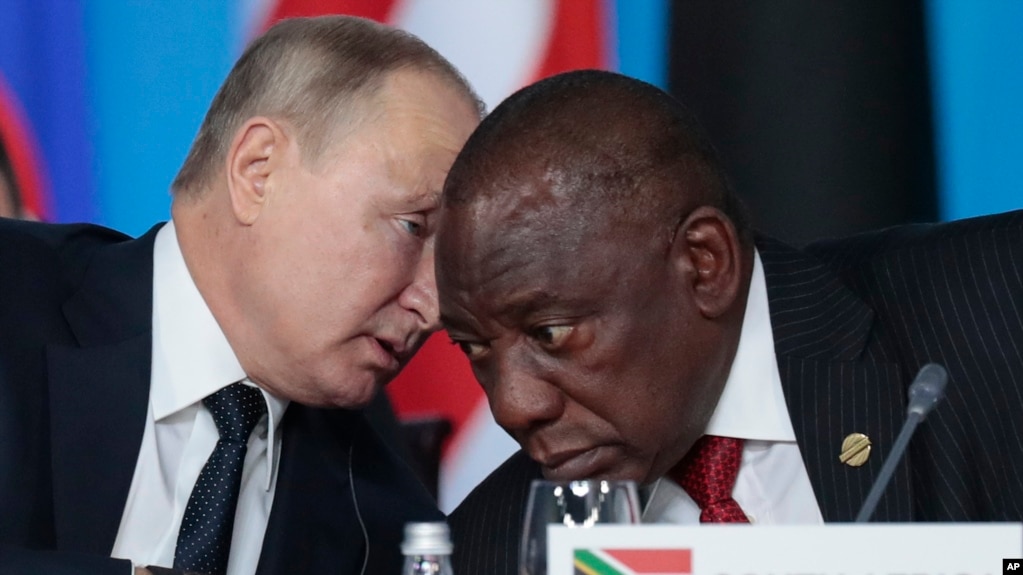
L-R Russian President Vladimir Putin, speaks to South African President Cyril Ramaphosa (Source: Sergei Chirikov/Pool Photo via AP)
🇷🇺 Putin intervenes as South Africa secures the return of 17 citizens misled into the Russia-Ukraine war
South Africa has repatriated 17 citizens who were misled into fighting in the Russia-Ukraine war after being promised security jobs.
President Cyril Ramaphosa publicly thanked Vladimir Putin for facilitating their return, a diplomatic exchange that underscores how labor vulnerability can quickly morph into foreign policy exposure.
Zooming out, similar recruitment patterns have surfaced in Kenya, Nigeria, and Ghana, with hundreds reportedly funneled into the conflict under pretenses. What started as scattered cases is now forcing multiple governments into quiet, high-level diplomacy, adding another unexpected layer to Africa’s evolving relationships with Moscow and the West.
Business Implication
African governments face rising geopolitical and reputational risk, which could translate into increased regulatory scrutiny, higher costs for citizen protection, and potential disruptions to foreign investment flows.
Global Trends, African Impact
Netflix co-CEO Ted Sarandos visited the White House Thursday afternoon to discuss his company's Warner Bros. bid. Hours later, Netflix walked away from the deal. (Source: Andrew Leyden/Getty Images)
It's easy to understand why Netflix walked away from WBD
Netflix has officially walked away from its $83 billion plan to buy most of Warner Bros. Discovery (WBD). The company decided to exit the deal after a rival bidder, Paramount Skydance, raised its offer to $31 per share in cash. Netflix leaders said the higher price made the deal "no longer financially attractive" and that they would rather stick to their own growth strategy.
By walking away, Netflix will actually receive a $2.8 billion "breakup fee" from the deal. Investors seemed happy with this decision, as Netflix’s stock price jumped about 10% after the announcement. Many were relieved that the company avoided a long, expensive battle with government regulators who were worried about a potential monopoly in the streaming market.
This move clears the path for Paramount Skydance to take over all of Warner Bros. Discovery. If that merger goes through, it will combine two of Hollywood's biggest studios and bring together famous brands like HBO, CNN, and Paramount+. For Netflix, the decision shows they are confident enough in their own content to continue growing without buying a major rival.
Executive Trivia

Doctors consulting young adult in a hospital ward (Photo Credit: DC Studio/Freepik)
Which of these African countries provides free, universal healthcare to all its citizens?
Did You Know?
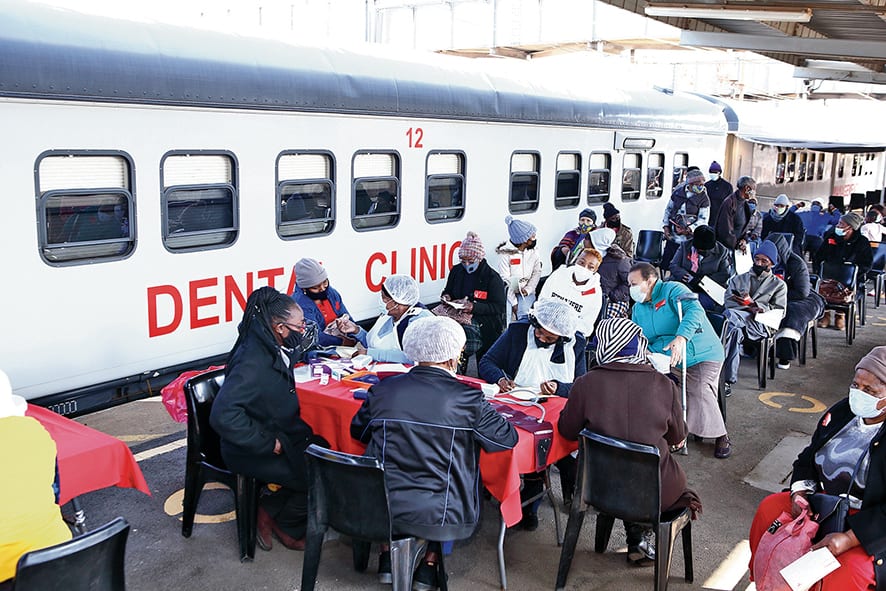
Phelophepa Health Care Train arrives at Dube Station. (Photo Credit: sundayworld.co.za)
There is a working hospital train in South Africa called the Phelophepa.
Instead of carrying commuters, it travels across rural areas delivering affordable healthcare to about 375,000 people each year, including primary care, dentistry, optometry, pharmacy services, and mental health treatment.
Know someone who'd enjoy this briefing?