Business Brief
By Business Insider Africa
From the Editor
The war in the Middle East continues to hit African budgets, with Zambia now set to lose $100 million in tax money to keep fuel prices from exploding. As the blockade of the Strait of Hormuz chokes global oil flows, nations are being forced to choose between tax revenue and the cost of living. This crisis is pushing governments to find new ways to protect their economies from global shocks.
This need for control is seen in the DR Congo, where a new ban on U.S. dollar cash payments aims to strengthen the local currency. Similarly, Aliko Dangote is moving his $20 billion refinery toward a public listing to open up ownership to investors across the continent. Both steps show a clear shift toward formalizing African wealth and relying less on foreign financial systems.
The digital world is also reacting to these tensions. Russia is testing a new payment network in Nigeria and Zimbabwe to bypass Western sanctions, while LinkedIn moves into the AI labor market.
Meanwhile, the struggle for connectivity continues as Starlink faces fresh license hurdles in Southern Africa. From energy to internet, the continent is navigating a world where old rules are quickly changing.
 | Victor Inusa, Newsletter Editor. |
✨ Today’s Must Read
Iran's war could cost Zambia $100 million as it disrupts the Strait of Hormuz oil flows
Zambia’s Finance Minister Situmbeko Musokotwane. (Photo Credit: @s_musokotwan)
Zambia is set to forfeit $100 million in revenue due to a three-month suspension of fuel levies. Finance Minister Situmbeko Musokotwane announced this tax break to shield citizens from soaring oil prices caused by the Iran war and the blockade of the Strait of Hormuz.
The minister described the move as throwing taxation "out the window" to keep fuel affordable. While the suspension helps lower pump prices, it deprives the government of money needed for national services. This loss occurs as Zambia struggles to reduce its budget deficit.
The crisis highlights Zambia's vulnerability as it lacks crude oil or refining capacity. Beyond the revenue loss, the government is worried about the actual availability of fuel supply. The focus has now shifted to ensuring a steady energy flow to protect the mining sector.
Why This Matters
The government is sacrificing $100 million in tax income to prevent a cost-of-living explosion. While this protects citizens' pockets today, it creates a massive hole in the national budget, making it harder for Zambia to fund essential services and pay off its debts.
The Big 3

(Photo Credit: impulseradioafrica)
🇨🇩 DR Congo is banning dollar cash payments in a high-stakes bid to take back control of its economy
The Democratic Republic of Congo is banning all cash transactions in foreign currencies starting April 2027. This bold move aims to end the dominance of the U.S. dollar and rebuild trust in the local franc. Businesses and individuals will no longer be allowed to pay or receive foreign cash.
By forcing foreign currency into traceable electronic banking channels, authorities hope to improve oversight of money flows. This shift is also part of a plan to exit the FATF grey list by closing loopholes in cash-based deals. The policy seeks to strengthen the nation's monetary sovereignty.
🇺🇸 Elon Musk told to ‘move on’ from South Africa as Starlink faces resistance in Namibia
Business leaders are urging Elon Musk to focus on other markets as Starlink faces regulatory hurdles in South Africa and Namibia. While neighboring countries have approved the service, South Africa’s strict ownership rules require 30% equity for historically disadvantaged groups.
In Namibia, authorities have warned against using Starlink without a license, as the company has not yet met local requirements. The delays have caused frustration among citizens who want faster internet, while experts suggest Musk may prioritize regions with fewer restrictions.
🇳🇬 Meet the founder who came to Nigeria by chance, saw tomatoes going to waste, and raised over $18 million to fix it
Mira Mehta founded Tomato Jos after seeing Nigerian farmers lose huge amounts of their harvest due to a lack of processing. Despite Nigeria being a top producer, it remains a major importer of tomato paste. She raised $40 million to build a factory that bridges this gap.
The venture supports thousands of small-scale farmers by providing better seeds and training to increase yields. By processing local tomatoes into high-quality paste, the company aims to reduce waste and boost food security, turning a chance discovery into a major business.
AI & Innovation
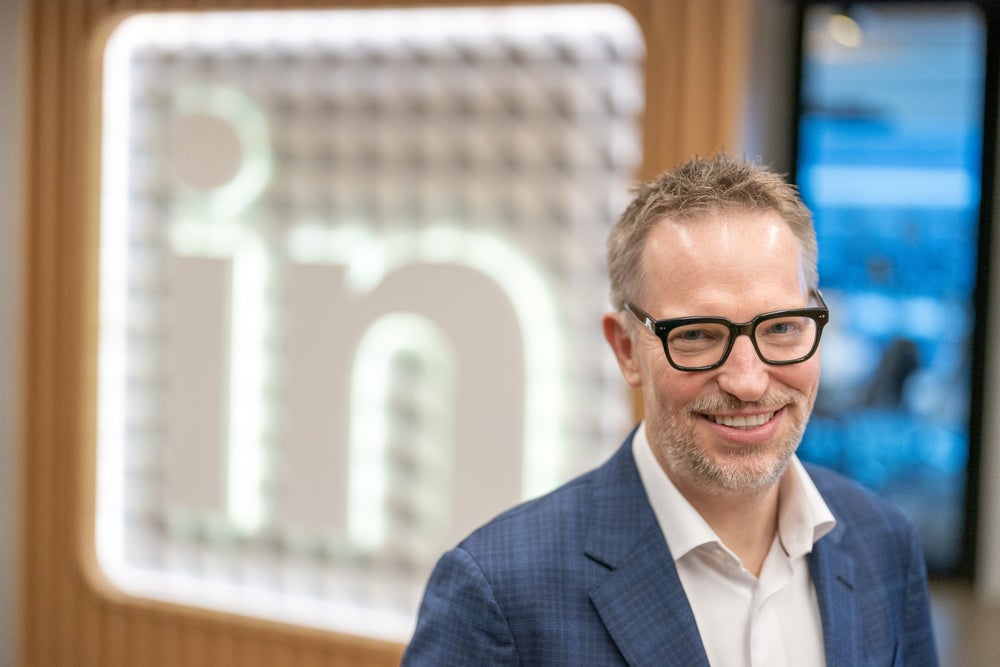
LinkedIn CEO Ryan Roslansky. Photographer: Bryan van der Beek/Bloomberg via Getty Images
LinkedIn is quietly moving into the AI training business
LinkedIn is testing a new "AI labor marketplace" where experts can earn up to $150 an hour training chatbots. The platform has posted over a dozen listings for roles in fields like coding, nursing, and finance. This move targets the fast-growing demand for human-led AI improvement.
AI trainers help chatbots by rating answers and testing their limits. On LinkedIn, software engineers can earn the highest rates, while finance and nursing experts can make up to $100 an hour. The site has even added notifications to alert users when these opportunities arise.
This launch puts LinkedIn in competition with major startups like Scale AI and Mercor. While these startups have seen massive valuation growth, they have also faced serious data breaches and security issues. LinkedIn's entry marks a major shift into the specialized gig economy.
Quote Of The Day
Success is not final, failure is not fatal: it is the courage to continue that counts.
Listicles
(Photo Credit: Shutterstock)
Top 10 most powerful passports in Africa at the start of 2026
Seychelles holds Africa’s most powerful passport in 2026, offering visa-free access to 154 countries. Mauritius and South Africa follow, while Morocco saw the biggest jump in rankings. The Henley Passport Index shows how shifting diplomacy is expanding travel for African citizens.
| S/N | Country | Visa-Free Destinations |
|---|---|---|
| 1 | 🇸🇨 Seychelles |
|
| 2 | 🇲🇺 Mauritius |
|
| 3 | 🇿🇦 South Africa |
|
| 4 | 🇧🇼 Botswana |
|
| 5 | 🇳🇦 Namibia |
|
| 6 | 🇱🇸 Lesotho |
|
| 7 | 🇸🇿 eSwatini |
|
| 8 | 🇲🇦 Morocco |
|
| 9 | 🇲🇼 Malawi |
|
| 10 | 🇰🇪 Kenya |
|
Source: Henley & Partners
Geopolitics & Power

(Photo Credit: X/CoinMarketCap)
🇷🇺 Africa emerges as testing ground for Russia’s parallel financial network amid tightening US sanctions
Russia is using Africa to test a new financial system that bypasses Western control. A firm called A7 is setting up digital payment links in countries like Nigeria and Zimbabwe. This allows Russia to keep trading globally despite being cut off from traditional banking systems.
The plan relies on Africa’s massive crypto market, which has grown by 52% in a year. By using digital assets and rubles, the system avoids the need for U.S. dollars. This makes Africa a strategic partner for Russia as it looks for ways to get around international sanctions.
This new network offers a way for money to flow between Russia and African markets without using the SWIFT system. It targets the continent's high demand for cheap ways to send money across borders. For Russia, it is a first step toward building a global financial backup.
Business Implication
This shift offers African businesses a way to trade without the high costs of traditional banks. However, joining this "parallel" system is a gamble. It could help bypass currency issues, but it also risks drawing the attention of Western regulators and future sanctions.
Global Trends, African Impact
Aliko Dangote, President of the Dangote Foundation. (Photo Credit: Noushad Thekkayil/NurPhoto via Getty Images)
🇳🇬 Africa could see its first-ever pan-African IPO as Dangote advances an ambitious listing plan
Aliko Dangote is launching a historic pan-African IPO for his $20 billion refinery, aiming to list across several African markets at once. This multi-country offering is designed to boost stock exchanges continent-wide, with Nigerians able to buy shares in just a few months.
The 650,000-barrel facility is moving toward a public model to improve transparency and longevity. Dangote plans to reduce his stake to about 65% or 70% based on demand and has refused to cap the shares available, ensuring the public has significant access to the project.
With advisors already appointed, this milestone is expected to help the Nigerian exchange rejoin global benchmarks. The shift follows the refinery’s successful start of fuel exports and marks a transition from a family-owned empire to a broadly owned public institution.
Executive Trivia

(Photo Credit: Unsplash/Kyle Glenn)
Did You Know?

(Photo Credit: geologyin.com)
South Africa has the world's largest reserves of Rhodium, the world's most expensive precious metal. It costs roughly $10,400 per ounce, while gold costs roughly $4,728 per ounce. South Africa accounts for 80% of global supply.
Know someone who'd enjoy this briefing?