Business Brief
By Business Insider Africa
From the Editor
More African countries are starting to reject U.S. aid when it comes with heavy strings attached, signaling a major shift in the continent’s diplomatic leverage. Leading this charge is Zambia, which recently pushed back against a $2 billion U.S. health deal because it was conditional on granting access to strategic minerals. It is a clear signal to the world: African resources are no longer "carrots" to be dangled for aid. As nations like Ghana and Zimbabwe join this pushback, we are witnessing a new era where the continent is demanding that trade and health be treated on their own merits, rather than as tools for foreign leverage.
This spirit of independence is also showing up in our industrial sector. Since transitioning into a net exporter of refined petroleum, Nigeria is proving that the Dangote Refinery—a $20 billion project built with Chinese and Indian expertise—can successfully challenge Western refining dominance. Meanwhile, Mozambique is exploring a pivot away from the U.S. Dollar entirely, weighing a switch to the Yuan to manage its $1.4 billion debt. Whether it's through massive infrastructure or currency shifts, the continent is aggressively redrawing its own economic boundaries to protect its long-term interests.
We are also seeing this demand for "data sovereignty" in the world of science and tech. In Kenya, Israel has deployed the world’s first mobile climate lab to finally give African leaders the ground-based data they need to make their own environmental policies, rather than relying on external satellite models. Even in the boardroom, as Mark Cuban points out, the "human spirit" and local expertise are becoming more valuable as we realize that AI lacks the consistency to handle complex, real-world consequences.
From the mining pits of Zambia to the tech hubs of Nairobi, Africa is proving that its future will be data-driven, industrial, and—most importantly—self-determined.
 | Victor Inusa, Newsletter Editor. |
✨ Today’s Must Read
How India and China helped build Dangote’s $20 billion refinery as Africa challenges Europe and US refining edge
(Photo Credit: Bloomberg)
The Dangote Refinery in Nigeria is transforming Africa’s energy landscape with a capacity of 650,000 barrels per day. Built with major support from China and India, it is reducing the continent's reliance on imported fuel and challenging the refining dominance of Europe and the US.
The project succeeded through Chinese industrial scale and Indian engineering. Chinese firms provided the core framework and the world’s largest distillation tower, while Indian consultants managed the project and trained hundreds of Nigerian graduates in refinery operations.
Nigeria has now become a net exporter of refined petroleum for the first time in decades. The refinery already supplies fuel across Africa and into Europe and Asia. Future expansion plans aim to double its capacity, potentially making it the largest refinery complex in the world.
Why This Matters
This refinery is a massive blow to Western energy dominance. By turning Nigeria from a fuel importer into an exporter, it creates a new axis of power—fueled by Chinese and Indian tech—that gives Africa the leverage to control its own prices and energy security for the first time.
Advertisement

Africa’s Business Heroes 2026: Where Africa's boldest founders find their path to scale
Africa’s Business Heroes (ABH) is calling on entrepreneurs for its 2026 edition, offering a $1.5 million prize pool. This platform is designed for founders in motion who are ready to test their businesses on a continental stage and move from a simple idea to a scalable venture.
The selection process has grown more competitive, recently expanding to a Top 100 to give more talent access to mentorship and global visibility. Since 2019, ABH-supported businesses have created over 123,000 jobs and raised $153 million, proving the program’s massive impact.
With only two years left in its ten-year mission, this is a final window for founders to join a legacy-defining cohort. The application deadline has been extended to May 7, 2026, offering a last chance for entrepreneurs to refine their stories and accelerate their growth.
The Big 3
(Photo Credit: Getty Images)
🇮🇱 Israel deploys world-first mobile climate lab in Kenya to tackle Africa’s data blind spot
Israel has launched the world’s first mobile climate lab in Machakos, Kenya, to fix Africa’s lack of ground-based environmental data. Run by the Weizmann Institute of Science, the unit uses 30 instruments to measure carbon, solar radiation, and water use for better accuracy.
The lab is mobile, allowing it to collect data across different ecosystems to improve global climate models. The project will run for three years and plans to expand to Tanzania and South Africa, helping leaders make better policy decisions based on real and accurate science.
🇺🇸 US hosts Africa’s largest military exercise with over 5,000 troops from 40+ nations
Exercise African Lion 2026 has launched with over 5,000 personnel from 40 nations, marking Africa's largest annual military drill. Led by US AFRICOM, the exercise spans Morocco, Ghana, Senegal, and Tunisia to boost joint readiness and response capabilities during global crises.
The drills cover land, air, maritime, space, and cyber domains to test modern warfare strategies. As the U.S. looks to strengthen ties, the training involves advanced data-sharing and logistics support, highlighting the continent's growing role in global security and defense.
🇳🇬 Billionaire Femi Otedola denies funding Dangote refinery, expresses interest in upcoming IPO
Nigerian billionaire Femi Otedola has denied claims that he funded the construction of the $20 billion Dangote Refinery. He clarified on X that he has not contributed any money to the project, calling the social media reports "completely and utterly false" fabrications.
While he did not finance the initial build, Otedola expressed strong interest in the refinery’s upcoming public offering. He revealed he has requested a special allocation to participate in the IPO, which is expected to see up to 10% of the company sold to the public.
AI & Innovation
(Photo Credit: Getty Images)
Mark Cuban says AI's 'biggest challenge' for businesses is consistency
Billionaire Mark Cuban argues that the biggest challenge for AI is consistency. Unlike old software built on strict rules, AI often gives different answers to the same question. This happens because models like Gemini 3.1 or GPT-5.5 choose answers based on probabilities.
This lack of predictability can lead to hallucinations, which is a major concern for businesses. While some say this variety is good for creative tasks, Cuban warns that AI doesn't understand the consequences of its output. It lacks a single, fixed path for every user.
Because AI is inconsistent, Cuban believes human judgment and domain expertise are now more valuable than ever. He says workers should use AI to learn everything rather than as a way to avoid learning, comparing those who use it poorly to people relying on a "drunk intern."
Quote Of The Day
The human spirit must prevail over technology.
Listicles

(Photo Credit: Facebook/Luckson F Mvula)
Top 10 Most Expensive Cities to Live in Africa (May 2026)
Abidjan and Cape Town now lead as Africa’s most expensive cities to live in for 2026. According to the Numbeo Index, high import costs and rising energy prices are pushing up the cost of living across these cities even as local industries expand.
| S/N | City & Country | Cost of Living Index |
|---|---|---|
| 1 | 🇨🇮 Abidjan Ivory Coast |
|
| 2 | 🇿🇦 Cape Town South Africa |
|
| 3 | 🇿🇦 Pretoria South Africa |
|
| 4 | 🇿🇦 Johannesburg South Africa |
|
| 5 | 🇳🇦 Windhoek Namibia |
|
| 6 | 🇪🇹 Addis Ababa Ethiopia |
|
| 7 | 🇿🇼 Harare Zimbabwe |
|
| 8 | 🇬🇭 Accra Ghana |
|
| 9 | 🇲🇦 Tangier Morocco |
|
| 10 | 🇿🇦 Durban South Africa |
|
Source: Numbeo 2026 Index
Geopolitics & Power
(Photo Credit: theheritagetimes)
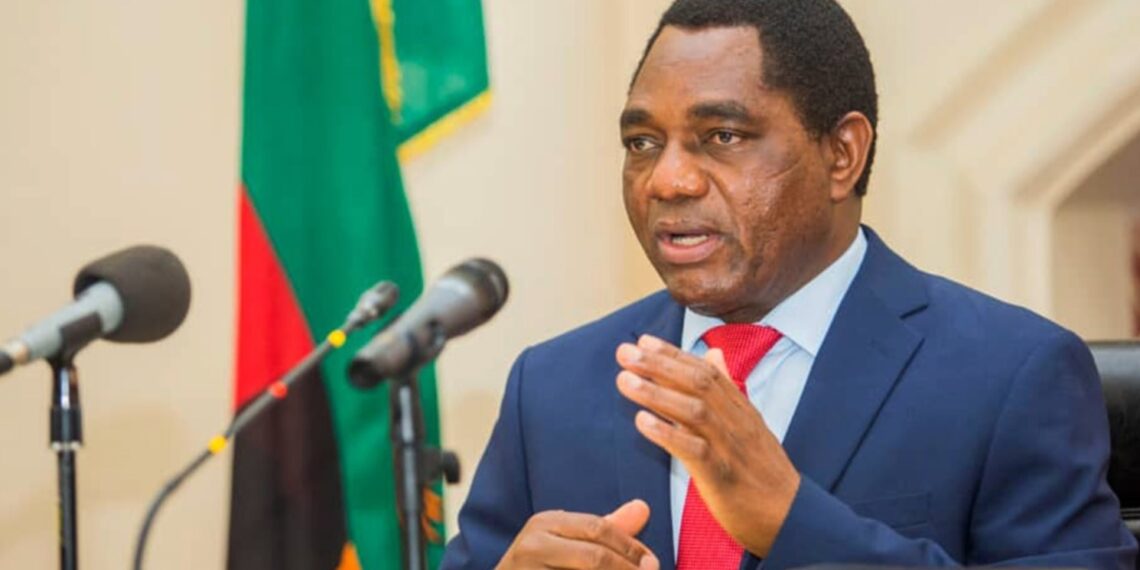
🇿🇲 Zambia wants U.S. deal tying health funding to strategic minerals access to be negotiated separately
Zambia has rejected a U.S. proposal that links health funding to access to critical minerals. The U.S. offered up to $2 billion in health support over five years, but tied it to data-sharing rules that Zambia fears could violate the privacy rights of its citizens.
The government insists that health and mineral deals should be negotiated separately. A major sticking point is the U.S. effort to make mineral access a condition for health aid. Zambia is also wary of rules that might give American companies unfair preferential treatment.
Other African nations are following suit, with Ghana and Zimbabwe rejecting similar U.S. aid deals due to data and sovereignty concerns. Zambia's pushback shows a growing trend of countries reassessing foreign aid strategies that demand too much control over national assets.
Business Implication
This pushback could delay U.S. mining projects and make it harder for American firms to secure cobalt and copper. As Zambia refuses to give U.S. companies preferential treatment, the door remains open for global competitors like China to negotiate more favorable mining terms.
Global Trends, African Impact
:max_bytes(150000):strip_icc()/renminbi-144756103-2046595231dc419b9787010fedb994ad-cf93b0164b174c0e8617b8b0760f3b4d.jpg)
(Photo Credit: Getty Images)
🇲🇿 Mozambique weighs switching China debt to Yuan as default risk builds
Mozambique is in talks with China to restructure $1.4 billion of its debt by converting it from U.S. Dollars into Yuan. As the risk of default builds and foreign reserves come under pressure, shifting to the Chinese currency could reduce debt-servicing costs and ease the heavy demand for dollars.
This move reflects a broader global trend of African nations turning to the Yuan to survive financial crises. With the IMF warning of rising arrears, Mozambique’s pivot shows how debt-distressed countries are increasingly leaning on Beijing’s currency as an alternative to traditional Western-backed financial systems.
The potential swap highlights a growing strategic shift in how Africa manages its external obligations. By decoupling from the dollar, Mozambique aims to gain fiscal breathing room, but the transition also signals China’s deepening influence over the continent’s long-term economic architecture.
Executive Trivia

(Photo Credit: Wikimedia.org)
Did You Know?
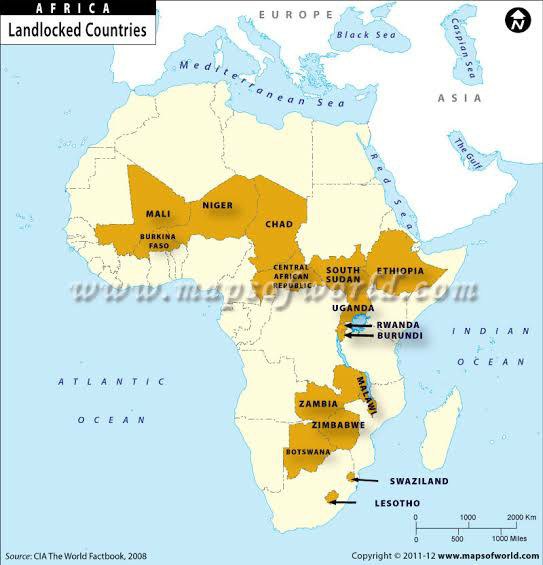
Africa is the most "landlocked" continent on Earth. It is home to 16 landlocked countries, which is more than any other continent. These nations face unique economic challenges because they must rely on their neighbors' ports for international trade.
Know someone who'd enjoy this briefing?