Business Brief
By Business Insider Africa
From the Editor
Nigeria has just pulled off a rare double win at the very top of Africa’s wealth ladder. With Abdulsamad Rabiu emerging as the continent’s second-richest man, Nigeria now holds both the 1st and 2nd spots, pushing aside long-time heavyweights like South Africa’s Johann Rupert and Nicky Oppenheimer. This isn't just about big bank accounts; it’s a signal that Nigeria’s industrial giants are finding ways to grow and dominate even when the global economy feels shaky. When local leaders like Rabiu and Dangote control this much capital, the conversation shifts from asking for foreign aid to deciding where African billions should be invested next.
We are seeing that exact "decide for ourselves" energy play out in the energy sector today. Aliko Dangote isn't just stopping at oil; he has just unveiled a massive 20,000MW power plan to tackle the electricity crisis that has held the region back for decades. It’s a similar story in East Africa, where Kenya has finally joined the oil-producing club with its first-ever commercial output. These aren't just projects on paper anymore; they are active shifts toward a continent that is finally building the infrastructure to power its own future.
However, this new-found independence is creating some friction. While the DRC and Zambia team up to fix their shared power crunch, countries like Burkina Faso are tightening their grip on foreign media to control their own story.
From Ukraine’s offer of drone tech to Kenya’s new oil wells, today’s stories show a continent that is no longer content with just being a source of raw materials; it is actively writing its own blueprint for growth.
 | Victor Inusa, Newsletter Editor. |
✨ Today’s Must Read
Nigeria's Abdulsamad Rabiu is now Africa's second richest man, nearing the $20 billion mark
Abdulsamad Rabiu (Photo Credit: Forbes)
Abdulsamad Rabiu has officially become Africa’s second-richest person, with his net worth hitting $19 billion. After gaining $8.88 billion this year alone, he is now the continent's best-performing billionaire and trails only Aliko Dangote on the wealth ladder.
Rabiu’s rise pushed him past South Africa’s Johann Rupert, whose wealth fell to $17.7 billion. Now ranked 138th globally, the Nigerian billionaire is closing in on the $20 billion milestone after his net worth jumped from $15.9 billion just last week.
A key driver of this growth is BUA Foods, which saw a 14% rise in profits despite a tough economy. The company's focus on operational efficiency and cost control helped it reach ₦142.32 billion in quarterly earnings, significantly boosting Rabiu's total assets.
Why This Matters
This shift cements Nigeria’s dominance at the top of Africa’s wealth rankings, with the two richest men on the continent now being Nigerian industrials. It shows that even in a volatile market, local companies can thrive through careful management and capacity expansion.
Advertisement

The Big 3
(Photo Credit: Getty Images)
🇳🇬 Africa’s richest man unveils bold plans for a 20,000MW power project in major push to transform energy supply
Aliko Dangote has announced plans for a massive 20,000MW power project. This marks a major move into the energy sector, following his success in oil refining and cement. He believes that Africa’s most urgent needs are energy, fertilisers, and industrial materials.
The project could transform Nigeria's electricity sector, which currently struggles with an unreliable 13,000MW capacity. Dangote says stronger cash flows and financial flexibility are driving this expansion, though he has not yet shared specific timelines or funding details.
🇧🇫 Burkina Faso suspends another foreign news channel, over the ‘glorification of terrorism’
Burkina Faso has suspended the French TV channel TV5 Monde, accusing it of spreading false information and "glorifying terrorism." The decision follows the channel's coverage of recent violent attacks in Mali, a fellow member of the anti-Western Alliance of the Sahel States.
The communication council identified multiple breaches of law and ethics in news reports aired between April and May 2026. This is not a first for the country; several other foreign media outlets, including the BBC and VOA, have faced similar bans over their reporting.
🇨🇩 DR Congo moves to secure stake in $270 million Zambia power link amid mining energy crunch
The Democratic Republic of Congo is considering taking a stake in a $270 million power project linking it to Zambia. The 200-kilometre high-voltage line aims to deliver up to 550 MW to Congo’s copper belt, helping to solve a massive energy crisis that is currently threatening mining output.
The country’s mining sector faces a deficit of over 5,000 MW, forcing companies to rely on expensive diesel generators to keep running. While this new link offers some relief, long-term stability depends on the Inga III hydropower project, which could eventually turn the DRC into a major regional power exporter.
AI & Innovation
(Photo Credit: Getty Images)
AI helped these startups run lean teams, but it also created new challenges to look out for
Coinbase is the latest major firm to lean into "tiny teams," planning to cut 14% of its staff to focus on AI efficiency. Leaders of lean startups say speed is the biggest advantage of AI, allowing small teams of fewer than 10 people to outpace larger, older organizations.
However, moving fast creates a "compounding" risk for mistakes. Without middle management, sloppiness or AI hallucinations can quickly ruin an entire system. Founders noted that hiring is now harder because many applicants simply use ChatGPT to cheat on recruitment tasks.
To succeed, small teams must balance heads-down execution with creative brainstorming. While AI can help junior employees produce senior-level work, human vision remains the deciding factor. The goal is to move at a high pace while using specific prompt safeguards to keep the AI on track.
Quote Of The Day
The price of doing the same old thing is far higher than the price of change.
The Boardroom Sketch

Geopolitics & Power
(Photo Credit: Medium)
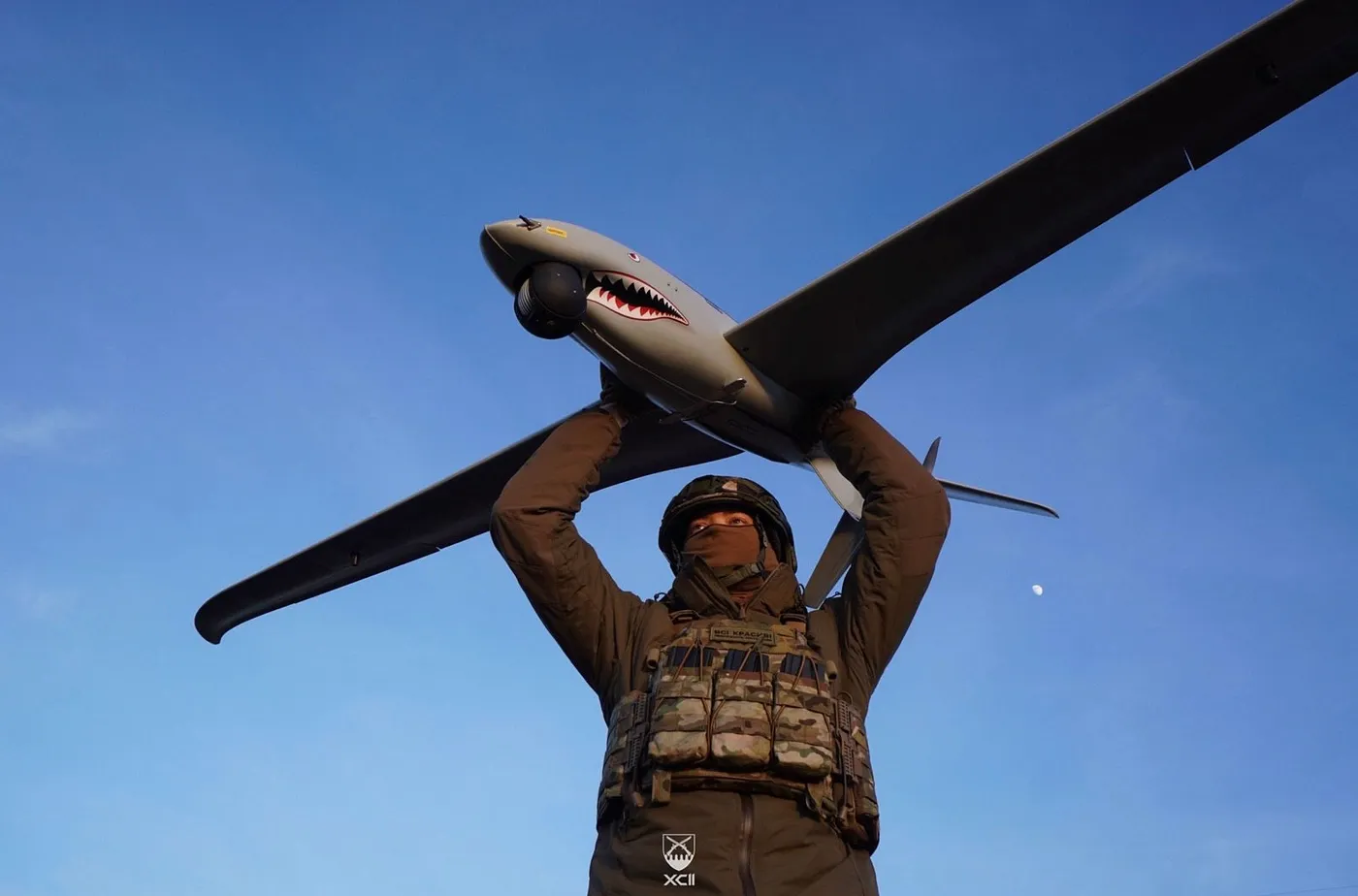
🇺🇦 Ukraine offers joint production of war-tested drones and missiles to friendly nations across Africa and beyond
Ukraine is offering friendly nations special deals to buy and co-produce battlefield-tested drones and missiles. This new framework aims to expand Ukraine’s defense exports while the country looks to identify and bar any nations with close military ties to Russia.
Several African countries are already increasing defense spending to fight insurgencies and protect borders. Ukraine plans to open up to 20 embassies across the continent and is even considering a Ukraine-Africa summit to compete for influence against Russia and China.
Ukraine’s drones and robots offer a lower-cost option for surveillance and combat in remote areas like the Sahel. While the war in Europe still limits some production, Ukraine says it has excess capacity and is ready to help African nations modernize their militaries.
Business Implication
Joint production deals could lead to new defense factories and high-tech jobs within Africa. However, companies must navigate strict export controls and the risk of weapons diversion, as Western governments closely watch for arms ending up on the regional black market.
Global Trends, African Impact

(Photo Credit: REUTERS)
🇰🇪 Kenya secures spot on Africa’s oil-producing list with first-ever output at 20,000 bpd
Kenya will begin commercial oil production from the South Lokichar fields before the end of the year. Initial output is set at 20,000 barrels per day, with plans to gradually increase to 50,000, officially moving the country from pilot exports to full commercial status.
While production is starting, Kenya's refining plans are limited by scale. Experts say sustainable refining requires at least 100,000 barrels per day, which is well above Kenya’s early output. As a result, the government is currently prioritizing exports and upstream readiness.
Kenya’s entry into the oil club comes as East Africa explores regional refining plans with Tanzania and Uganda. This shift aims to reduce reliance on imported fuel, even as global supply pressures from the Middle East drive demand for alternative sources across Africa.
Executive Trivia

(Photo Credit: Wikimedia)
Did You Know?

(Photo Credit: Wikimedia)
The European Union flag’s twelve stars aren’t actually tied to its member count. While many believe they represent the first twelve countries to join, the number has stayed at twelve even as the union grew to 27 members. Instead, the stars are a symbol of unity, solidarity, and harmony among the peoples of Europe
Know someone who'd enjoy this briefing?