Business Brief
By Business Insider Africa
From the Editor
Brent crude hitting $114 amid US-Iran threats creates an "inflationary trap" that defines the current African market volatility. This surge offers oil-producing giants like Nigeria a temporary revenue windfall, yet it simultaneously threatens to hollow out corporate margins across the continent as the rising cost of imported energy rapidly erodes household spending power.
This theme of energy security extends to the gas sector, where Ukraine is pivoting toward Mozambique to solve a 50% collapse in its domestic production. Meanwhile, a high-stakes "solar reset" is unfolding as China begins cutting export incentives for Africa just days after a $2.9B Tesla deal, forcing a critical rethink of the continent’s path to energy sovereignty.
Industrial and digital shifts are accelerating as UNISA becomes the first African university to own an airport to meet technical training demands, while Nollywood’s Omoni Oboli hits 32M views to redefine streaming dominance. We explore these moves alongside a $10M climate win in palm waste and Palantir’s new "human-in-the-loop" strategy for the age of AI.
 | Victor Inusa, Newsletter Editor. |
✨ Today’s Must Read
War pushes Ukraine toward Africa’s growing gas giants to help curb an energy crisis
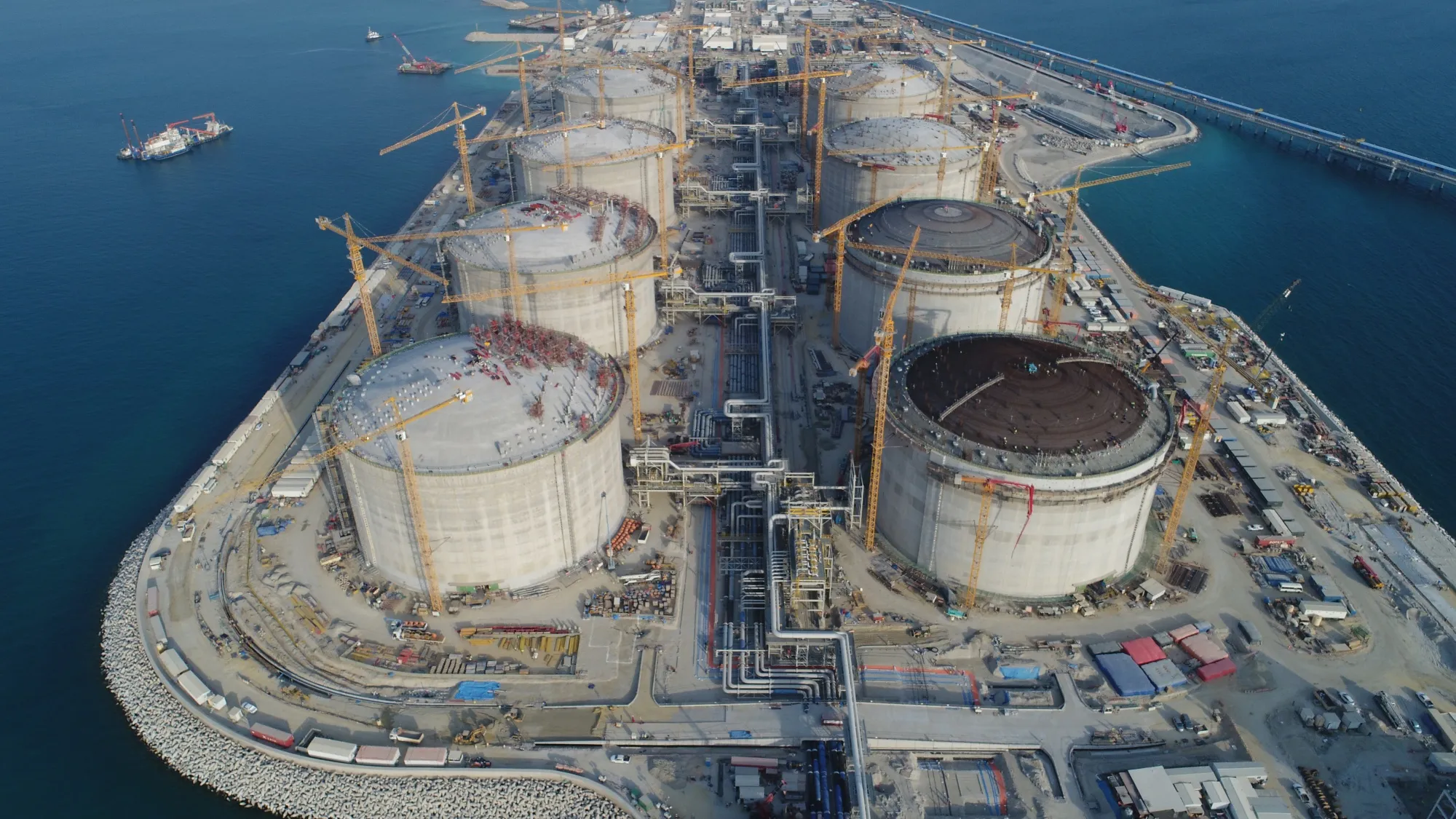
(Photo Credit: Kuwait Integrated Petroleum Industries Co.)
Ukraine is pivoting toward Mozambique to secure liquefied natural gas (LNG) as Russian strikes continue to devastate its local energy infrastructure. President Volodymyr Zelensky confirmed the interest following high-level talks aimed at replacing lost domestic production.
Mozambique, poised to become a global gas powerhouse, offers a critical alternative for Kyiv, which has avoided Russian gas since 2015. However, the partnership is a race against time, as Ukraine’s local output has been cut in half by persistent attacks on its gas facilities.
While the deal promises energy security for Ukraine, Mozambique faces its own hurdles, including a $4.5 billion surge in project costs due to regional insurgency. This collaboration highlights a growing "security-for-energy" exchange between the two embattled nations.
Why This Matters
This shift underscores Africa’s rising role as a strategic buffer for European energy security. For Mozambique, securing a high-demand partner like Ukraine could provide the necessary geopolitical leverage and capital to finally stabilize its volatile Cabo Delgado gas region.
The Big 3
Main entrance of the University of South Africa (UNISA), the largest university on the African continent. (Stock Photo via Getty Images)
🇿🇦 Africa’s largest university becomes first on the continent to own an airport
The University of South Africa (UNISA) has made history by becoming the first tertiary institution in Africa to own an airport. The acquisition of the 20-hectare facility marks a strategic shift from traditional distance learning to high-impact, practical technical training.
Vice-Chancellor Puleng LenkaBula describes the airport as a "launchpad for future innovators," specifically targeting growth in aviation and drone tech. This investment signals a move toward industrial self-sufficiency, positioning UNISA students to lead the continent’s infrastructure.
🇨🇳 China set to cut solar incentives for Africa days after Elon Musk negotiates $2.9B Chinese solar equipment deal for Tesla
Beijing is set to phase out export tax rebates for solar panels and batteries, a move expected to drive up costs for African energy projects. This shift comes just days after Elon Musk negotiated a $2.9B deal with Chinese firms to secure supply chains for Tesla’s solar expansion.
For Africa, this marks the end of "artificially cheap" Chinese solar pricing. As global demand surges and subsidies vanish, the continent faces a gradual upward shift in equipment costs, forcing a critical rethink of how to close energy gaps amidst tightening global supply.
🇳🇬 Meet the founders who raised $10M from palm waste and climate tech
Ikenna Nzewi and Uzoma Ayogu, founders of Releaf, have raised over $10 million by transforming Nigeria's palm oil industry with their proprietary "Kraken" technology. The startup has pivoted from simple processing to turning agricultural waste into high-value industrial biochar.
By 2030, Releaf aims to remove 700,000 metric tons of CO2 while impacting over one million farmers. This "waste-to-value" model not only boosts agricultural yields by 23% but also introduces a dollar-based revenue stream through global carbon credits, securing its fiscal future.
AI & Innovation
Palantir CEO Alex KarpDavid Dee Delgado (Photo Credit: Getty Images for The New York Times)
Alex Karp says there's 2 ways to know if you have a future in the age of AI
Palantir CEO Alex Karp warns that professional survival in the AI era depends on two factors: the ability to handle high-level abstraction, and a deep understanding of how to apply AI to specific, real-world problems.
Karp argues that those who fail to master these two elements will be displaced by automated systems. For African innovators, this is a call to move beyond consumer-level AI and focus on building "intelligence layers" that solve complex infrastructure and logistics challenges.
The future belongs to those who can bridge the gap between technical capability and industrial utility. As AI becomes a commodity, the real value lies in the "human-in-the-loop" strategy, where critical thinking directs the machine toward high-stakes economic outcomes.
Quote Of The Day
"Identify a human need and reach out to fill it. Business is about finding solutions, not just making money."
Listicles

The International Monetary Fund (IMF) logo is seen at the IMF headquarters building in Washington. (REUTERS)
10 African countries with the highest debt to the IMF in March 2026
While some nations maintain "debt-light" profiles, these ten countries are currently carrying the heaviest financial obligations to the International Monetary Fund. This ranking reflects the high-stakes reliance on multilateral lending to stabilize domestic economies and manage fiscal shocks.
| S/N | Country | Total IMF Credit Outstanding ($) |
|---|---|---|
| 1 | 🇪🇬 Egypt |
|
| 2 | 🇨🇮 Côte d'Ivoire |
|
| 3 | 🇰🇪 Kenya |
|
| 4 | 🇬🇭 Ghana |
|
| 5 | 🇦🇴 Angola |
|
| 6 | 🇨🇩 DRC |
|
| 7 | 🇪🇹 Ethiopia |
|
| 8 | 🇹🇿 Tanzania |
|
| 9 | 🇿🇲 Zambia |
|
| 10 | 🇨🇲 Cameroon |
|
Source: IMF, 2026
Geopolitics & Power

MQ-9 Reaper drone (Photo Credit: REUTERS/Janis Laizans)
🇺🇸 U.S. MQ-9 Reaper drones now active in Nigeria as 200 troops provide military support
The U.S. has officially launched MQ-9 Reaper drone operations in Nigeria, with 200 American troops on the ground to provide direct military support. This massive escalation in regional security cooperation marks a high-stakes pivot as the U.S. seeks to secure its West African footprint.
This development follows a period of shifting alliances in the Sahel, where neighboring states have moved away from traditional Western partnerships. By positioning advanced drone tech in Nigeria, the U.S. is signaling a long-term commitment to "containment" and regional stability.
For the Nigerian government, this military alliance is a complex "power play." While it boosts counter-insurgency capabilities, it also places Nigeria at the center of a global geopolitical tug-of-war, testing its ability to lead the regional security architecture under heavy scrutiny.
Business Implication
Increased military presence and surveillance tech can provide a short-term "security floor" for investors in the North. However, executives must monitor how this alliance affects Nigeria's diplomatic standing with its "Sahel Alliance" neighbors to avoid trade disruptions.
Global Trends, African Impact
(Photo Credit: Sheldon Cooper/SOPA Images/LightRocket via Getty Images)
Oil prices push higher and gold erases gains after US and Iran traded threats over the weekend
As the Iran-Israel war enters its fourth week, Brent crude has surged to $114 a barrel. This global price spike is creating a dangerous "inflationary trap" for African markets, where the rising cost of imported energy is rapidly eroding corporate margins and household spending.
The threat of a direct U.S.-Iran confrontation has sent gold prices tumbling while oil rallies, forcing a massive reallocation of global capital. For import-dependent African economies, this volatility is no longer just a "risk", it is a direct hit to fiscal stability and growth.
This global trend underscores the fragility of transcontinental supply chains. As shipping insurance climbs and energy costs skyrocket, the "African Impact" is a forced acceleration toward energy sovereignty, as nations realize that global wars have very local consequences at the pump.
Executive Trivia
:max_bytes(150000):strip_icc():format(webp)/GettyImages-955491344-f978b8072db542cdbce83d48d9648d52.jpg)
(Photo Credit: Paranyu Pithayarungsarit / Getty Images)
Did You Know?

(Photo Credit: Harvard)
Crude oil was once used in early medicine to treat headaches and stomach upset. Historically, it was also used to preserve Egyptian mummies and, in the 1870s, oil was occasionally cheaper than drinking water.
Know someone who'd enjoy this briefing?