From the Editor
A war thousands of miles away has arrived at Africa’s doorstep, not with boots on the ground, but through the gas pump. With Brent crude surging past $80 following the escalation between the U.S. and Iran, the continent is bracing for a "silent tax" on growth that threatens to spike food and transport costs overnight. Yet, beneath the headlines of volatility, a narrative of strategic resilience is taking hold.
Nigeria is meeting this crisis with a record $50 billion reserve "war chest" to defend the Naira, while simultaneously accelerating a $575 billion pivot toward domestic gas-powered mobility. This drive for independence extends into the digital realm, where Cassava Technologies and NVIDIA have launched Africa’s first autonomous AI network to de-risk the continent's tech future from Western cloud reliance.
Even in Egypt’s battered property market, billionaires are downsizing to keep homeownership attainable, proving that while the global shock is inevitable, Africa's response is becoming increasingly proactive.
 | Victor Oluwole, Editor-In-Chief, Business Insider Africa. |
✨ Today’s Must Read
Oil surges past $80 as Iran tension escalates, why Africa could feel the impact first
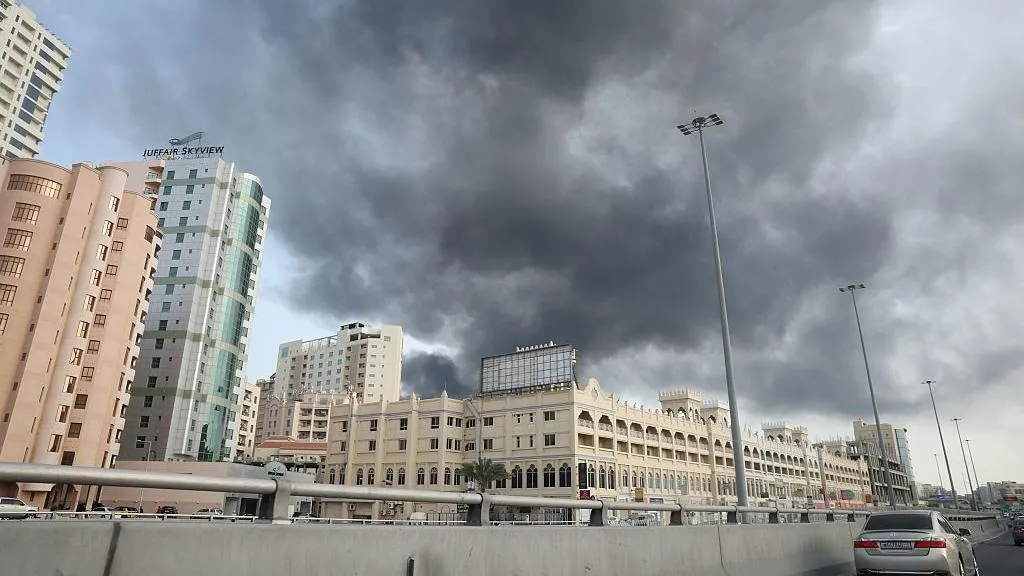
Videos appear to show missiles and drones striking the vicinity of the US Fifth Fleet headquarters in Bahrain (Photo Credit: Getty Images)
A war thousands of miles away is hitting African wallets with immediate force. Following the February 28 strikes on Iran, Brent crude leaped from $67 to over $82 a barrel, the sharpest spike since the 2022 invasion of Ukraine. This "fear premium" is driven by concerns that the conflict could block the Strait of Hormuz, a chokepoint responsible for 20% of the world's oil supply, effectively choking global energy markets overnight.
For Africa’s fuel-importing nations, this isn't just a market fluctuation; it’s a "silent tax" on economic growth. As global prices rise, governments must spend more foreign exchange to secure fuel, weakening local currencies and driving up pump prices. This creates a vicious cycle where higher transport costs lead to immediate food inflation, squeezing households that are already battling fragile economic recoveries and high living costs.
Even major oil producers like Nigeria and Angola face a difficult paradox. While their state revenues may swell from higher export prices, the cost of importing refined petroleum, which most African nations still rely on, threatens to wipe out those gains. For the continent’s businesses, the message is clear: the Middle East escalation is no longer a distant headline, but a direct threat to the bottom line that requires urgent fiscal resilience.
Why This Matters
This volatility serves as a brutal "stress test" for African economies already struggling with debt and fragile currencies. While oil exporters may see a temporary revenue windfall, the broader continent faces a dangerous spike in transport and food costs that could trigger social unrest. Ultimately, the crisis proves that without domestic refining capacity, African nations remain dangerously exposed to geopolitical shocks they cannot control.
The Big 3
Olayemi Cardoso, governor of the Central Bank of Nigeria, says FX reforms and improved transparency helped lift Nigeria’s net reserves to $34.8 billion by end-2025. (Photo Credit: @Cenbank)
🇳🇬 Nigeria’s net reserves jump 772% to $34.8 billion, now exceed entire 2023 gross stock
In a massive show of fiscal recovery, Nigeria’s net foreign exchange reserves have skyrocketed to $34.8 billion, a 772% increase from 2022. Gross reserves hit $50.45 billion this February, driven by aggressive FX reforms and a crackdown on illicit flows. This surge has significantly boosted investor confidence and stabilized dollar inflows into the continent's largest economy.
This "war chest" provides a critical buffer to defend the Naira against global shocks caused by the U.S.-Iran conflict. For businesses, this jump in liquidity signals a more predictable environment for managing foreign debt and repatriating funds. By rebuilding these buffers, Nigeria is better positioned to absorb rising import costs without a total currency collapse.
🇳🇬 Nigeria bets on gas-powered mobility with campus refueling as $575 billion investment plan begins
Nigeria is moving to insulate its transport sector from volatile petrol prices with the launch of a new Compressed Natural Gas (CNG) facility at Obafemi Awolowo University (OAU). This is the first of 20 planned university-based hubs designed to slash transport costs by up to 40% while lowering emissions. The initiative is a practical step in a massive $575 billion national plan to transition the country toward its own abundant, cheaper gas reserves.
For the business community, this pivot toward "gas-powered mobility" represents a strategic hedge against the global oil price spikes triggered by the Middle East crisis. By building refueling infrastructure at major institutions, the government is creating a scalable model for a nationwide network. This shift not only reduces the fiscal burden of fuel subsidies but also opens up significant investment opportunities in gas infrastructure and vehicle conversion kits across the country.
🇪🇬 Egyptian billionaire Sawiris says inflation is forcing developers to shrink home sizes
Egypt’s skyrocketing inflation and currency devaluation are fundamentally reshaping its real estate landscape. To keep homeownership attainable, developers like Naguib Sawiris’s Ora Developers are pivoting toward "compact luxury," reducing unit sizes to offset surging construction costs. This shift reflects a new market reality where smaller, more efficient apartments are replacing the sprawling suburban villas that once defined the aspirations of the middle and upper classes.
For investors, this trend highlights a broader regional shift toward functional affordability over traditional square footage. As building material costs climb, the "downsizing" of Egypt’s property market offers a survival blueprint for developers facing similar inflationary pressures across Africa. While the price per square meter continues to rise, the move toward smaller units ensures that the secondary market remains liquid and accessible despite the country's challenging economic climate.
AI & Innovation

Partnership further enables Cassava to accelerate digital transformation in Africa.(Photo Credit: Cassava Technologies)
Digital Sovereignty: Africa’s New "AI Factory"
Cassava Technologies has launched a first-of-its-kind autonomous network powered by NVIDIA. By using local data centers (CAIMEx) to host AI models, the continent is reducing its reliance on expensive Western cloud services. This move toward "digital de-risking" ensures Africa's tech economy stays online even if global trade routes are disrupted.
For businesses, this shifts AI from a costly import to a localized utility, promising a 772% boost in efficiency for logistics and fintech firms. As leaders coordinate to protect local data, these "regional AI factories" are becoming the continent's next major infrastructure play.
Listicles

The 10 African countries where food prices will rise the most in 2026. (Photo Credit: Instagram/@biodunaoyebanji)
The 10 African countries where food prices will rise the most in 2026
A new global outlook by the UN’s Food and Agriculture Organization (FAO) reveals a widening food security gap across the continent. While global markets are stabilizing, domestic factors like currency volatility and import dependence are expected to drive significant price hikes in several African nations throughout 2026. For high-inflation economies like Nigeria and Angola, building internal agricultural resilience has become a critical defense against these persistent geopolitical and climate shocks.
S/N | Country | Projected Food Inflation (YoY) |
|---|---|---|
1 | 🇳🇬 Nigeria | 17.1% |
2 | 🇦🇴 Angola | 14.8% |
3 | 🇿🇲 Zambia | 10.8% |
4 | 🇪🇹 Ethiopia | 10.1% |
5 | 🇧🇮 Burundi | 8.8% |
6 | 🇨🇻 Cabo Verde | 7.2% |
7 | 🇨🇲 Cameroon | 7.0% |
8 | 🇰🇪 Kenya | 6.8% |
9 | 🇸🇴 Somalia | 6.7% |
10 | 🇹🇿 Tanzania | 6.7% |
Source: FAO
Geopolitics & Power
African nations sign bilateral health agreements with the United States as Trump era global health strategy reshapes aid partnerships across the continent. [Getty Images]
🇺🇸 FULL LIST: African countries that signed Trump’s controversial health deals
A fundamental shift in global diplomacy is unfolding as the United States officially moves to replace traditional multilateral aid with direct, bilateral health agreements. Under a new "America First" foreign assistance strategy, at least 14 African nations, including Kenya, Rwanda, and Niger, have now signed controversial deals that trade billions in health funding for stricter conditions, including increased domestic spending and mandatory data sharing with Washington.
This move marks a historic departure from the era of large-scale programs like USAID and the World Health Organization. By dealing directly with individual capitals, Washington is significantly increasing its leverage on the continent, demanding a "co-financing" model that forces African governments to match U.S. investments. While supporters argue this promotes self-reliance and accountability, critics warn it creates a "fragmented" health landscape where the U.S. can use essential aid as a tool for geopolitical alignment.
For the region, the stakes are highest in the Sahel and East Africa. Countries like Niger, which recently signed a $128 million deal, are balancing these new U.S. obligations against their growing military ties with other global powers. This "bilateralism" is effectively turning healthcare into a strategic frontline, where access to life-saving funding is now tethered to a country’s willingness to align with Washington’s specific transparency and economic standards.
Business Implication
This "bilateralism" marks the end of no-strings-attached aid. For investors, these deals act as a "green light" for markets moving into the U.S. regulatory and data-sharing orbit. The new co-financing requirements will likely trigger a wave of privatization, creating high-growth opportunities for medical tech and insurance firms to fill gaps in restructured national budgets.
Global Trends, African Impact

East Africa out of range as Iran signals restraint with 2,000 km missile limit. (Photo Credit: Fatemeh Bahrami/Anadolu Agency)
East Africa out of range as Iran signals restraint with 2,000 km missile limit
As global anxiety surges over the U.S.-Iran conflict, Tehran’s Ambassador to Kenya has moved to quell fears of a regional spillover. The envoy emphasized that Iran’s missiles are capped at a 2,000km range, a strategic limit set to signal a defensive rather than expansionist posture. This technical "red line" effectively places East Africa outside the immediate theater of war, even as tensions escalate in the nearby Gulf.
However, the Ambassador warned that while the "physical" threat is out of range, the economic fallout is not. The primary risk to the continent lies in the disruption of maritime trade routes like the Red Sea. If these corridors are compromised, the spike in insurance premiums and shipping costs will act as a "geopolitical tax" on African imports, regardless of how far a country sits from the front lines.
This outreach highlights Iran's effort to protect its "South-South" partnerships amidst Western isolation. By reassuring Nairobi, Tehran is attempting to stabilize its trade ties with the continent, which have grown significantly of late. For African nations, the message is clear: while the soil remains safe from strikes, economic stability is still inextricably tied to a de-escalation that remains out of their hands.
Executive Trivia

(Photo Credit: Unsplash/Grant Charsley)
Did You Know?

The Dangote Industries refinery on the outskirts of Lagos, Nigeria, shown here in 2023, is the largest in Africa and may eventually be the largest in the world. (Photo Credit: Reuters/Temilade Adelaja)
Did you know that the Dangote Refinery is now the largest single-train refinery in the world? At full capacity, it can process 650,000 barrels per day; more than enough to meet Nigeria’s entire domestic demand and turn the country into a major fuel exporter.
Know someone who'd enjoy this briefing?