Business Brief
By Business Insider Africa
From the Editor
Happy Monday! We are starting the week with a sobering reminder of how quickly regional stability can shift. While the world's eyes are on the military tensions between the U.S. and Iran, a different kind of crisis is unfolding within our own borders. A wave of xenophobic protests across South Africa has forced Nigeria to begin emergency repatriations for its citizens. It is a tense moment for the continent’s two largest economies, as internal friction now threatens the very people and businesses that keep our regional trade moving.
Despite these local tensions, some nations are finding ways to thrive by looking inward. Ethiopia is currently on track to hit a historic $10 billion in export revenue this year—a massive jump from the $3 billion it earned just three years ago. By doubling down on the "Made in Ethiopia" movement and boosting local manufacturing, they are proving that reducing reliance on imports is a powerful shield against global economic shocks.
At the same time, the rules of global trade are being rewritten. China has officially opened its doors to almost the entire continent, granting zero-tariff access to 53 African nations while excluding Eswatini over its ties to Taiwan. From the new SUV production lines in Pretoria to Egypt's tough IMF-backed energy reforms, today’s stories show a continent in the middle of a major reset. We’ll be watching to see how these shifts in policy, safety, and industry will define the rest of this year.
 | Victor Inusa, Newsletter Editor. |
✨ Today’s Must Read
Nigeria to repatriate citizens from South Africa amid rising attacks

(Photo Credit: REUTERS)
Nigeria is preparing to fly home citizens from South Africa who wish to return voluntarily due to a rise in xenophobic attacks. So far, 130 Nigerians have signed up for evacuation as viral videos and reports of harassment against African migrants continue to fuel safety fears.
The violence stems from growing anti-immigrant sentiment, with some groups accusing foreign nationals of taking jobs and straining public services. These tensions have led to protests and threats against businesses, forcing countries like Ghana to advise their citizens to hide.
Nigeria has summoned South Africa’s envoy and warned that these attacks could damage diplomatic ties. Officials are currently compiling data on citizens still in the country to coordinate evacuation flights and ensure that lives and businesses are no longer put at risk.
Why This Matters
This situation threatens the stability of relations between Africa’s biggest economies. As Nigeria and Ghana move to protect their people, the rising violence highlights a regional crisis over migration that could disrupt trade and cooperation across the continent.
The Big 3

(Photo Credit: Getty Images)
🇪🇹 Ethiopia’s export revenue is set to jump from $3 billion to a historic $10 billion
Ethiopia expects its export revenue to hit a record $10 billion this fiscal year, a massive jump from less than $3 billion just three years ago. Prime Minister Abiy Ahmed credits this growth to the "Made in Ethiopia" movement and a booming industrial sector.
National production capacity has climbed from 47% to 67%, helped by over 2,800 new investments. The country is also focusing on import substitution, saving nearly $5 billion in foreign exchange by producing 96 specific items, like ceramics, locally instead of importing them.
🇪🇬 Egypt raises gas prices for industries as energy crisis deepens and IMF reforms bite
Egypt has raised natural gas prices for major industries to cut subsidies as part of IMF-backed reforms. Effective this May, cement producers will pay $14 per million Btu, while steel, iron, and fertilizer firms will see rates rise to $7.75 to help stabilize public finances.
The move follows Egypt's shift from a gas exporter to an importer due to falling domestic output. Rising import costs, currency weakness, and geopolitical tensions have tripled monthly spending on gas, making these price hikes a necessary step for fiscal stability.
🇿🇦 South Africa emerges production base for Chinese brand Jetour’s T1 and T2 SUV models
Chinese automaker Jetour will produce its rugged T1 and T2 SUV models in Pretoria, South Africa. Using a facility acquired from Nissan, the company aims to manufacture 50,000 units annually, positioning the country as a key part of its global expansion strategy.
The project is expected to create at least 3,000 new jobs over the next 18 months as the plant is retrofitted. Jetour has already become a top seller in the local market, even outperforming established luxury brands like Mercedes-Benz and Kia in a short period.
AI & Innovation

(Photo Credit: Adobe/LuisAlfonso)
I'm not worried about AI taking my job. Guests and clients still want a real person to make them feel special.
A hospitality veteran of 20 years argues that empathy and personal connection are irreplaceable by AI. While technology can manage data, guests still want a real person to make them feel special, seen, and understood through genuine human interaction rather than generic code.
The author shares that his roles—from concierge to VIP attendant—required resourcefulness that machines lack. Tasks like retrieving jewelry from dumpsters or sewing clothes in a pinch demand a physical presence and quick thinking that AI cannot replicate in the real world.
Ultimately, the magic of service comes from a partnership where technology is the tool and the human is the lead operator. AI can generate recipes, but it cannot duplicate the "hand-made" seasoning or the empathy-guided choices that define high-end guest experiences.
Quote Of The Day
A river cuts through rock not because of its power, but because of its persistence.
Listicles

(Photo Credit: IMF)
10 African countries with the highest debt to the IMF in April 2026
African nations are leaning more on IMF loans to stay stable, but this reliance often limits their long-term growth. While these funds help in crises, high debt repayments are now draining money away from essential development projects in countries like Kenya, Ghana, and Senegal.
| S/N | Country | IMF Credit Outstanding (SDR) |
|---|---|---|
| 1 | 🇪🇬 Egypt |
|
| 2 | 🇨🇮 Cote d'Ivoire |
|
| 3 | 🇰🇪 Kenya |
|
| 4 | 🇬🇭 Ghana |
|
| 5 | 🇦🇴 Angola |
|
| 6 | 🇨🇩 DR Congo |
|
| 7 | 🇪🇹 Ethiopia |
|
| 8 | 🇹🇿 Tanzania |
|
| 9 | 🇿🇲 Zambia |
|
| 10 | 🇨🇲 Cameroon |
|
Source: IMF
Geopolitics & Power

(Photo Credit: qz.com)
🇨🇳 China’s zero-tariff policy now covers 53 of Africa’s 54 countries, excluding one in Southern Africa
China has added 20 more nations to its zero-tariff policy as of May 1, now covering 53 of Africa’s 54 countries. This expansion grants almost the entire continent duty-free access to Chinese markets, significantly deepening Beijing’s commercial impact across Africa.
Eswatini is the only country excluded from this policy due to its diplomatic ties with Taiwan. China is using this trade move to signal that economic benefits come with strings attached, creating a sharp contrast between how it treats its friends versus allies of Taiwan.
The diplomatic tension recently peaked when Taiwan’s president was denied overflight clearance by neighboring countries to visit Eswatini. This highlights Beijing's influence in squeezing Taiwan’s international space while it abolishes tariffs for nearly all other nations.
Business Implication
While the U.S. has imposed 30% tariffs on several African nations, China’s duty-free move gives 53 countries a massive competitive edge. However, for Eswatini, this exclusion creates a trade barrier that highlights the rising cost of its specific diplomatic alliances.
Global Trends, African Impact
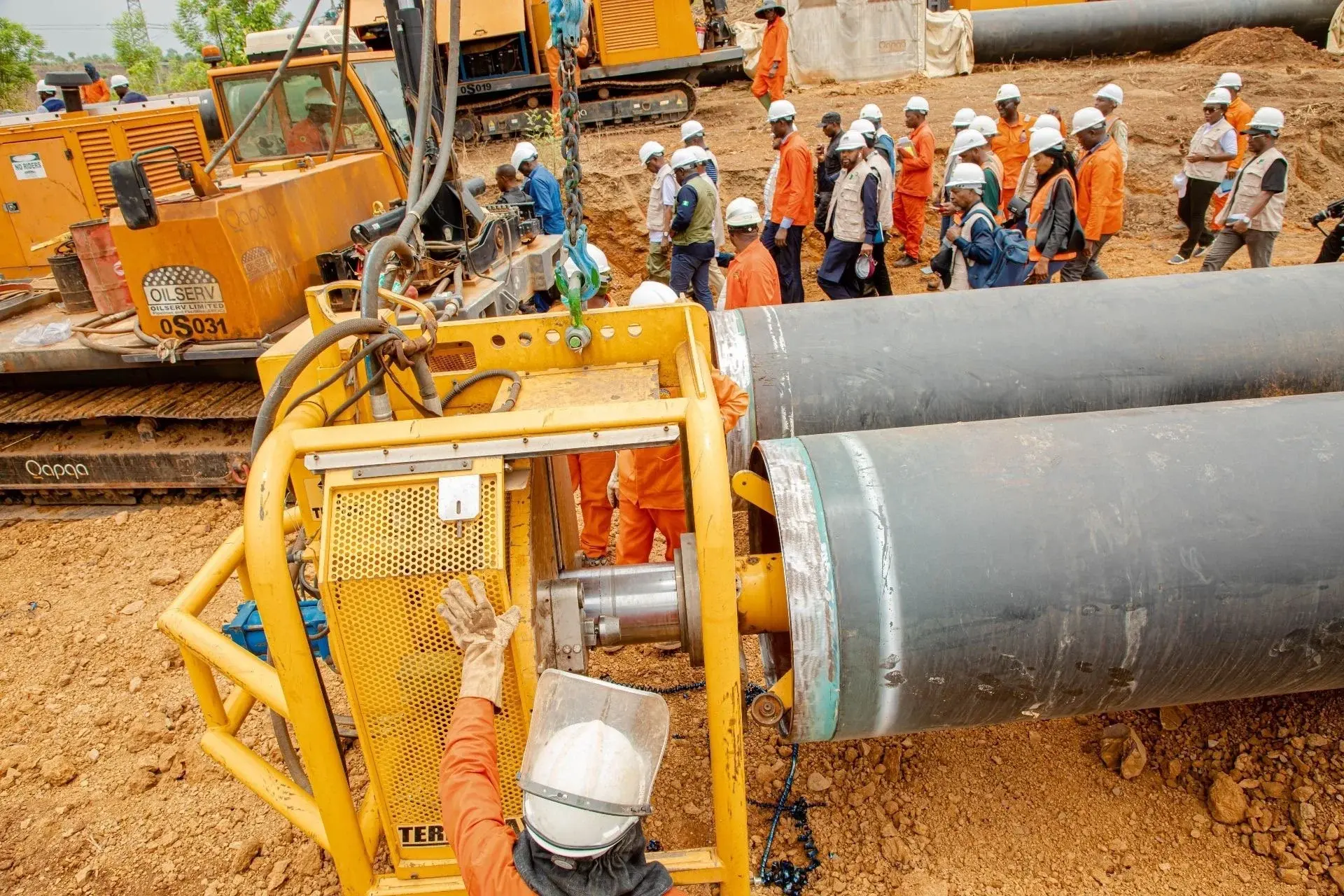
(Photo Credit: bridgsitelimited.com)
🇳🇬 Nigeria-led gas exports to Europe gain traction via 13-nation West African pipeline by 2031
The Nigeria-Morocco Gas Pipeline is gaining momentum as a new energy corridor set to link West Africa to Europe by 2031. Spanning 13 countries along the Atlantic coast, the project will rely on Nigeria’s gas reserves with support from producers like Senegal and Mauritania.
Recent blockages in the Strait of Hormuz caused global energy prices to surge by 40%, forcing Europe to seek alternative supplies. In response, Morocco’s state energy firm has launched a rigorous fundraising effort for the project, which was originally estimated to cost $25 billion.
The nearly 7,000-kilometer pipeline aims to transport 30 billion cubic meters of gas annually. While critics once called it an "impossible dream," the goal of reducing energy dependence on Russia and avoiding Middle East price shocks has made the project a strategic priority.
Executive Trivia

(Photo Credit: Wikipedia)
Did You Know?

(Photo Credit: Unsplash/Ron Dauphin)
Every zebra has a stripe pattern that is completely unique to them, much like a human fingerprint. These patterns are so distinct that mothers and foals use them to recognize each other in a massive herd. Scientists even believe the most individualized markings are found right on the zebra's shoulders!
Know someone who'd enjoy this briefing?