Business Brief
By Business Insider Africa
From the Editor
The EU’s €290M strategic move into Nigeria’s broadband and pharma sectors marks a decisive realignment from aid to "friend-shoring." This capital injection aims to secure digital and health sovereignty, turning Africa’s largest economy into a critical buffer.
This industrial momentum extends to the DRC, where a $1.4B lithium project is set to underpin the global EV battery supply chain. Simultaneously, VW’s expansion in Rwanda and Nigeria’s port digitalization signal a continent-wide sprint to claim manufacturing leads.
From AI agents upending cybersecurity workloads to Cape Town International leading the 182M-seat aviation boom, the pace of African innovation is surging. We explore these power moves and the $1.9M battery supply chain win to keep you ahead in this rapidly evolving market.
 | Victor Inusa, Newsletter Editor. |
✨ Today’s Must Read
EU ramps up Nigeria strategy with €290 million investment in broadband, pharma and agriculture

(Photo Credit: EU DEL)
The European Union has unveiled a strategic €290 million investment package for Nigeria, signaling a shift in how the West engages with Africa’s largest economy. This funding is targeted at three critical pillars: expanding high-speed broadband, scaling pharmaceutical manufacturing, and modernizing agriculture.
This move comes after high-level ministerial talks in Abuja, aimed at reducing dependence on Asian supply chains. By financing local production of vaccines and medications, the EU is not just providing aid but building a strategic industrial partner to safeguard regional health security and digital sovereignty.
For Nigeria, the influx of capital into broadband infrastructure is a vital catalyst for its booming tech sector. This partnership represents a sophisticated "de-risking" strategy, ensuring that West Africa’s digital backbone is built on diverse global investments while creating thousands of high-tech jobs for its youth.
Why This Matters
This investment is a direct response to global supply chain vulnerabilities exposed in recent years. For businesses, it opens up massive opportunities in the Nigerian tech and healthcare sectors, backed by European regulatory standards and capital, effectively turning Nigeria into a primary regional hub for "friend-shoring."
Advertisement
March shoulder season in Europe and Asia: Fewer crowds – more opportunities.
March shoulder season in Europe and Asia: Fewer crowds – more opportunities
Savvy travelers are increasingly capitalising on the March "shoulder season" to bypass peak-summer chaos in Europe and Asia. By timing trips between the winter chill and the July rush, tourists are securing airfares and hotel stays at prices up to 40% lower than high-season rates.
In Japan and Thailand, this window offers a rare sweet spot of mild weather and manageable crowds. For African travelers, the shift is gaining massive momentum, with 2025 data showing a 50% surge in off-peak bookings as families and professionals seek more value-driven luxury.
Beyond the savings, the March window allows for a deeper connection with iconic landmarks like the Louvre or Tokyo’s blooming parks without the stress of multi-hour queues. It is a strategic move for the modern traveler who prioritizes ease and efficiency over seasonal status.
The Big 3
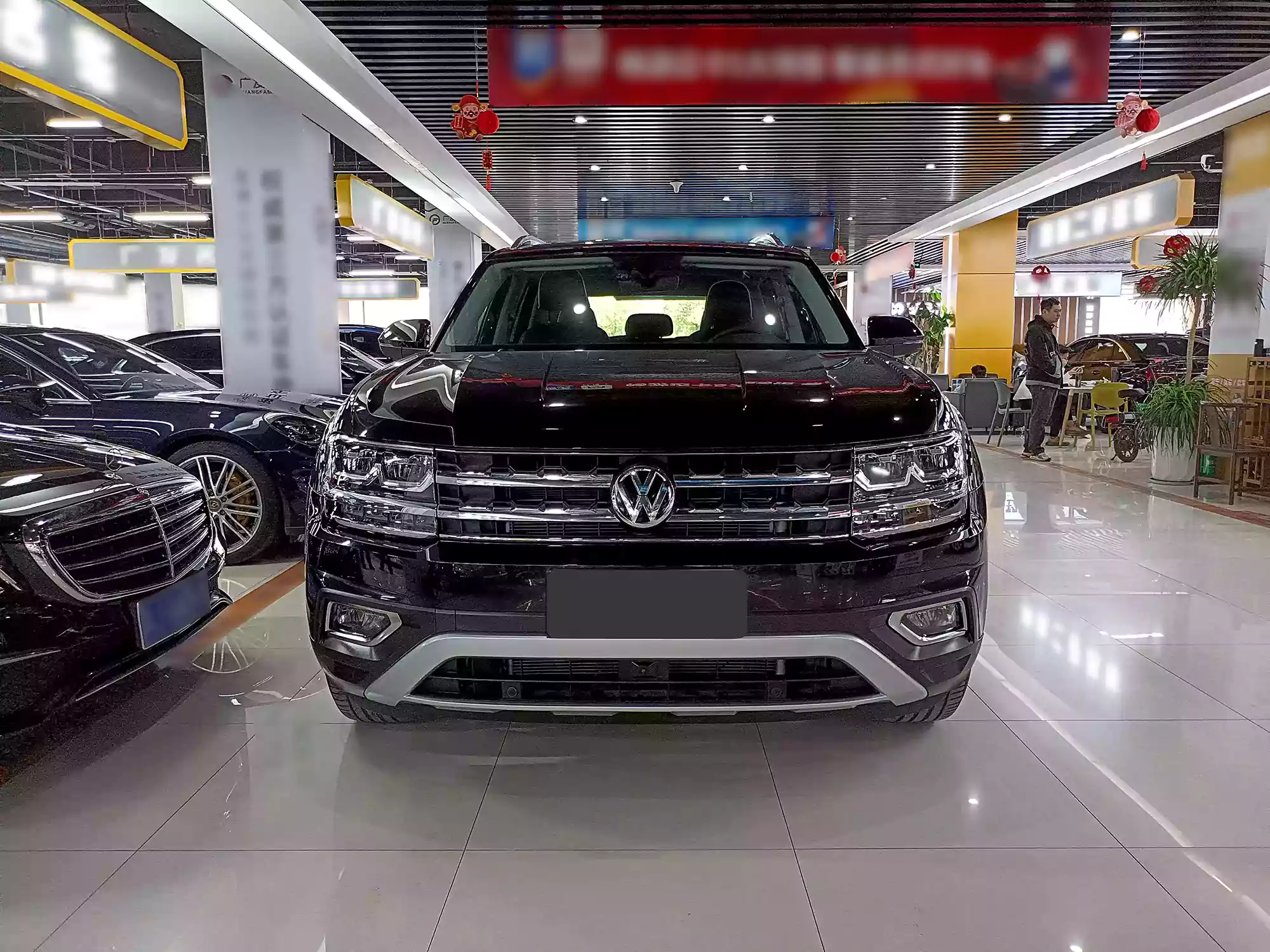
(Photo Credit: autobuy.com.co)
🇷🇼 Global automaker Volkswagen shuts down Rwanda exit rumours, unveils expansion plan
Global automaker Volkswagen has officially debunked rumors of an exit from Rwanda, announcing a strategic expansion of its Kigali operations instead. The company plans to increase its local assembly capacity, doubling down on its "Moving Rwanda" initiative and the growing East African market.
This move is a significant vote of confidence in Rwanda's business environment and its ambition to become a regional manufacturing hub. By increasing local production, VW is betting on the country’s push for sustainable mobility and a rising middle class eager for locally assembled vehicles.
🇨🇩 DRC’s $1.4 billion lithium project could become one of the largest mines in the world
The Democratic Republic of Congo is set to host one of the world's largest lithium mines, with the Manono project receiving a massive $1.4 billion investment signal. This development positions the DRC as a central pillar in the global electric vehicle battery supply chain, moving beyond its traditional cobalt dominance.
The project is expected to transform the regional economy, creating thousands of jobs and attracting significant infrastructure development to the Tanganyika province. As global demand for "green minerals" hits record highs, the DRC is leveraging this project to negotiate better trade terms and deeper industrial integration.
🇨🇳 Beijing deepens Africa ties with high-level 3‑nation tour covering South Africa, 2 other nations
China is strengthening its continental footprint with a high-level diplomatic tour covering South Africa, Seychelles, and Kenya. This mission aims to deepen "all-weather" partnerships, focusing on infrastructure, digital economy cooperation, and balancing trade deficits that have long favored Beijing.
The tour comes as African nations increasingly seek diversified investment and technology transfer rather than simple debt-based financing. By engaging the continent’s three largest regional hubs, Beijing is signaling a strategic shift toward long-term industrial stability and enhanced geopolitical alignment.
AI & Innovation

(Photo Credit: Getty Images)
AI agents are cybersecurity firms' newest employees
Cybersecurity firms are now hiring "AI agents" as full-time digital employees to tackle the global talent shortage. Unlike standard chatbots, these autonomous agents execute multi-step workflows, managing threat detection and reducing human analyst workloads by up to 90%.
Early adopters like Huntress report that these agents can triage 10,000 incidents monthly, turning a 30-minute manual investigation into a sub-minute task. This shift allows human experts to focus on complex "Iron Man" level threats while AI handles the mundane digital noise.
However, the transition isn't without friction. While cost-effective, operating at a fraction of a human salary, these agents still struggle with vague tasks and require strict oversight. For Africa’s tech hubs, this signals a future where entry-level roles evolve into AI-supervision.
Quote Of The Day
Do the best you can until you know better. Then when you know better, do better.
Listicles
Cape Town International Airport, South Africa. (Photo Credit: constructionreviewonline)
Top 10 best airports in Africa for 2026 according to latest ranking
Africa’s aviation sector is reaching new altitudes in 2026, with 182.4 million seats scheduled through October, an 18.6% jump from last year. Cape Town International has claimed the top spot in the latest Skytrax report, celebrated for its seamless passenger flow and modern infrastructure.
| Rank | Airport | Country |
|---|---|---|
| 1 | Cape Town International | 🇿🇦 South Africa |
| 2 | O.R. Tambo International | 🇿🇦 South Africa |
| 3 | Marrakech Menara | 🇲🇦 Morocco |
| 4 | King Shaka International | 🇿🇦 South Africa |
| 5 | Mohammed V International | 🇲🇦 Morocco |
| 6 | Cairo International | 🇪🇬 Egypt |
| 7 | Sir Seewoosagur Ramgoolam | 🇲🇺 Mauritius |
| 8 | Kigali International | 🇷🇼 Rwanda |
| 9 | Addis Ababa Bole | 🇪🇹 Ethiopia |
| 10 | Ivato International | 🇲🇬 Madagascar |
Source: Skytrax
Geopolitics & Power
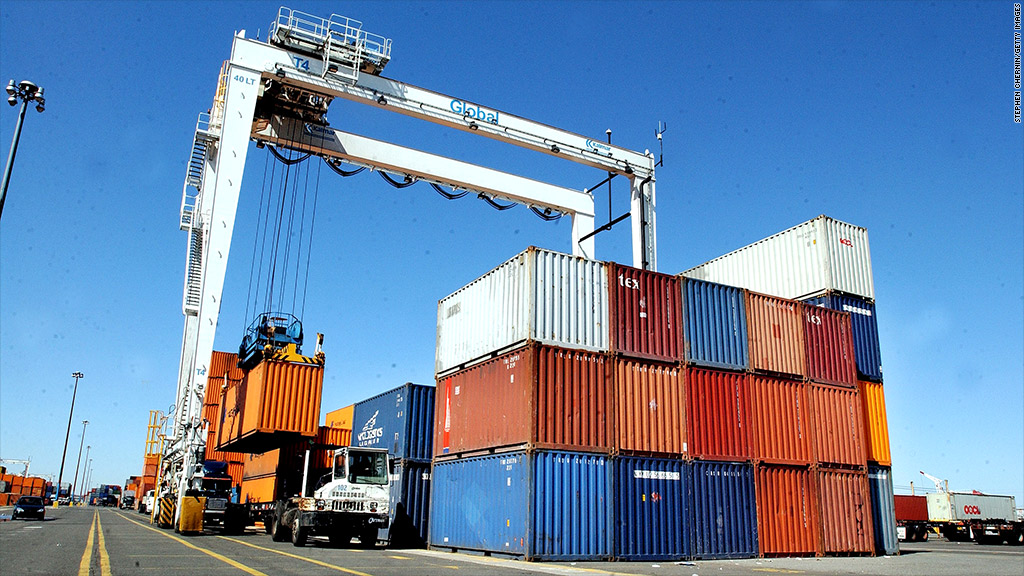
(Photo Credit: NPA)
🇳🇬 Nigeria bets on digital overhaul and port upgrades to tackle one of the world’s slowest ports
Nigeria has launched the first phase of its National Single Window (NSW) to modernize the ports of Apapa and Tin Can Island. This digital trade platform aims to fix some of the world’s slowest port clearance times by streamlining documentation across multiple government agencies.
The move is a strategic play to reclaim trade volumes lost to neighboring West African countries with more efficient logistics. By digitizing administrative bottlenecks, Abuja hopes to improve its global competitiveness and better position itself within the AfCFTA trade framework.
Success hinges on execution rather than design, as the government secures external financing for quay rehabilitation and dredging. If effective, this overhaul could drastically lower trade costs, reduce consumer prices, and boost revenue collection by plugging digital leakages.
Business Implication
For companies, faster clearance means reduced demurrage costs and smoother supply chains. However, businesses must prepare for a transition period where digital compliance becomes the new baseline for maritime operations, requiring updated internal logistics and data systems.
Global Trends, African Impact
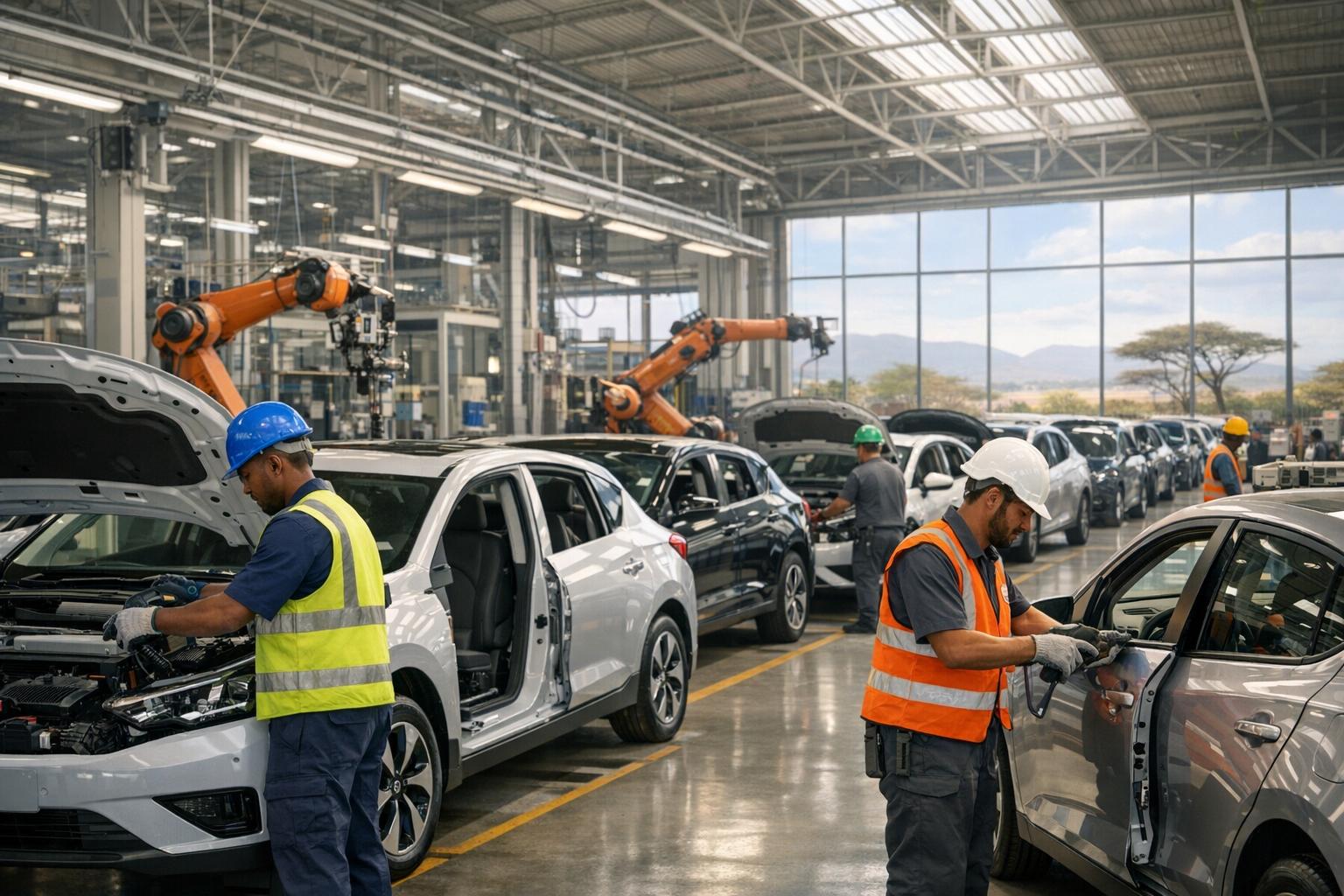
(Photo Credit: ev24.africa)
🇿🇦 South Africa invests $1.9million to boost local EV battery supply chain ambitions
South Africa is moving to secure its place in the global green energy transition by injecting fresh capital into Giyani Metals. This funding supports a Johannesburg-based demonstration plant producing high-purity manganese sulphate, a critical component for lithium-ion EV batteries.
As the world shifts away from internal combustion engines, this local processing push reduces Africa's reliance on imported battery tech. By refining raw materials on home soil, South Africa is evolving from a simple mineral exporter into a sophisticated player in the global EV value chain.
The project signals a broader continental shift toward sustainable, low-carbon industrialization. With a commercial-scale plant in Botswana also on the horizon, this regional integration aims to capture a significant share of a market projected to explode across Africa and Europe by 2030.
Executive Trivia

(Photo Credit: Shutterstock)
What does "www" stand for?
Did You Know?

(Photo Credit: home.cern)
The very first website ever created (info.cern.ch) went live in 1991 and is still online today. While it started as a single page of text, there are now over 1.1 billion websites worldwide; meaning that if you tried to visit every single one for just one second, it would take you more than 35 years without sleeping!
Know someone who'd enjoy this briefing?