Business Brief
By Business Insider Africa
From the Editor
We’ve been discussing how African nations are shifting from simply owning resources to owning the factories that process them. Today, Aliko Dangote is taking that further by entering the $11.5 billion petrochemical market. By making detergent ingredients locally, he is turning his refinery into a revenue engine that finally cuts out expensive imports.
However, the broader push for industrialization still faces major hurdles. For instance, Nigeria exported over 55 million barrels of crude this year while its flagship refinery struggled for local supply. This paradox shows that while the continent is ready to build, broken domestic supply chains still force our biggest projects to rely on international markets to stay operational.
This search for stability is also redrawing the regional map. Ghana’s growing industrial appeal is now pulling Nigerian drone makers across the border to set up their regional hubs. From the uranium race in Namibia to new tech hubs in Accra, Africa is moving beyond the "raw material" label and repositioning itself as a strategic powerhouse for global trade.
 | Victor Inusa, Newsletter Editor. |
✨ Today’s Must Read
Dangote refinery expands into lucrative chemicals market, tapping $11.5 billion opportunity amid import gap
Aliko Dangote (Photo Credit: Ernest Ankomah/Getty Images)
Aliko Dangote is expanding his refinery into the petrochemicals market to produce key ingredients for detergents. Using Honeywell technology, the facility aims to produce 400,000 metric tons of linear alkylbenzene (LAB) and 750,000 tons of propylene every year.
The expansion is part of a bigger plan to hit $100 billion in annual revenue within four years. These projects are expected to be finished in three years and build on a separate $1 billion deal to grow Dangote Cement across seven other African countries.
The move targets a global chemicals market worth an estimated $11.5 billion by 2030. By doubling refining capacity to 1.4 million barrels per day by 2028, the group is positioning itself as a major player in the global supply chain for industrial and cleaning products.
Why This Matters
This shift reduces Nigeria's reliance on imported chemical ingredients for everyday items like soap. By producing these locally, Dangote is not only saving foreign exchange but also turning his industrial complex into a massive revenue engine for the entire region.
The Big 3

(Photo Credit: lanrefadire.com)
🇺🇸 Meet Lanre Fadire, the billion-dollar designer behind over $1.5bn in savings for US borrowers
Nigerian product designer Lanre Fadire has helped US borrowers save nearly $2 billion by simplifying the complex student loan system. Working with Summer PBC, he redesigned digital tools to help users navigate 140 different programs that are often hidden by bureaucracy.
His approach focuses on "design as infrastructure," moving beyond aesthetics to fix functional bottlenecks. By creating clearer workflows and alternative verification pathways for workers, his work ensures that existing financial relief programs are actually accessible to the public.
🇺🇸 US–China mineral race heats up as US targets Africa’s largest uranium producer to increase imports
The United States is intensifying its efforts to secure uranium from Namibia, Africa’s top producer, to challenge China’s long-standing dominance in the region. U.S. officials aim to boost imports and establish partnerships between American companies and local mining operations.
Namibia accounts for roughly 10% to 12% of global uranium output and is also rich in lithium and rare earths. The U.S. plans to use institutions like EXIM and the DFC to fund exploration and infrastructure, turning the country into a key battleground in the global mineral race.
🇳🇬 Nigeria exports 55.39 million barrels as Dangote refinery faces crude supply shortfall
Nigeria exported 55.39 million barrels of crude in early 2026, highlighting a major gap between global exports and local needs. While production remains high, the nation’s largest industrial asset, the Dangote refinery, is receiving only about 27% of the crude it needs to run.
To stay operational, the refinery has been forced to import crude from international markets despite Nigeria being Africa’s top producer. Industry experts warn that these supply shortages and reliance on imports are driving up local fuel prices and threatening national energy security.
AI & Innovation
(Photo Credit: Juliar Starr Coaching)
I built an AI tool to mimic my work. It's helped create passive income from my solo business.
Career coach Julia Starr used "vibe coding" to build an app that replicates her signature coaching framework. Despite having zero technical knowledge, she used AI tools like Lovable and ChatGPT to turn her natural language prompts into a functional product in just two days.
To ensure quality, Starr spent 60 hours refining the app through user testing and screen-sharing sessions. She used AI to analyze transcripts and fix issues like "hallucinated" job titles, eventually launching the app, Threshold, to provide a passive income stream for her business.
The app now serves as a marketing funnel, leading new customers to higher-ticket coaching. Priced at $29 to ensure user commitment, it has a 75% conversion rate. Starr believes the AI expands her reach to those who cannot afford direct coaching without replacing human relationships.
Quote Of The Day
We face neither East nor West; we face forward.
Listicles

(Photo Credit: Linkedin/Lars Moscherosch)
Top 10 African countries with the weakest merchant marine fleet in 2026
Understanding a nation's merchant marine strength is about more than just counting ships; it is a measure of economic sovereignty and military backup. A weak fleet forces countries to rely on foreign vessels for trade, draining national wealth through high freight and insurance fees.
| S/N | Country | Fleet Strength (No. of Ships) |
|---|---|---|
| 1 | 🇨🇩 DR Congo |
|
| 2 | 🇳🇦 Namibia |
|
| 3 | 🇸🇩 Sudan |
|
| 4 | 🇪🇹 Ethiopia |
|
| 5 | 🇲🇷 Mauritania |
|
| 6 | 🇨🇬 Republic of Congo |
|
| 7 | 🇪🇷 Eritrea |
|
| 8 | 🇧🇯 Benin |
|
| 9 | 🇸🇴 Somalia |
|
| 10 | 🇿🇲 Zambia |
|
Source: Global Firepower
Geopolitics & Power

Nathan Nwachuku, 22, and Maxwell Maduka, 24 are founders of the Abuja-based startup Terra Industries. (Photo Credit: Bloomberg)
🇳🇬 Nigerian drone makers look to move core operations to Ghana
Nigerian startup Terrahaptix is expanding to Ghana to build its first facility outside its home country. The Accra-based center will serve as a regional hub for manufacturing autonomous aircraft and defense systems to address rising militant activity across West Africa.
Militants in the Sahel are increasingly using modified commercial drones and fiber-optic systems, which bypass traditional defenses. In response, Terrahaptix has tested drone-interceptor tech and plans to produce 50,000 units within two years to meet military demand.
The company recently raised $34 million in rapid funding rounds led by Lux Capital, pushing its valuation over $100 million in just two years. Construction of the new Ghana facility is nearly finished, with full operations expected to begin by the end of June 2026.
Business Implication
Terrahaptix’s move underscores a shift in the defense market as startups fill gaps in regional security. Rapid funding and expansion show high investor confidence in African-made hardware, while the move to Ghana highlights the country's growing appeal for tech manufacturing.
Global Trends, African Impact
(Photo Credit: Bloomberg)
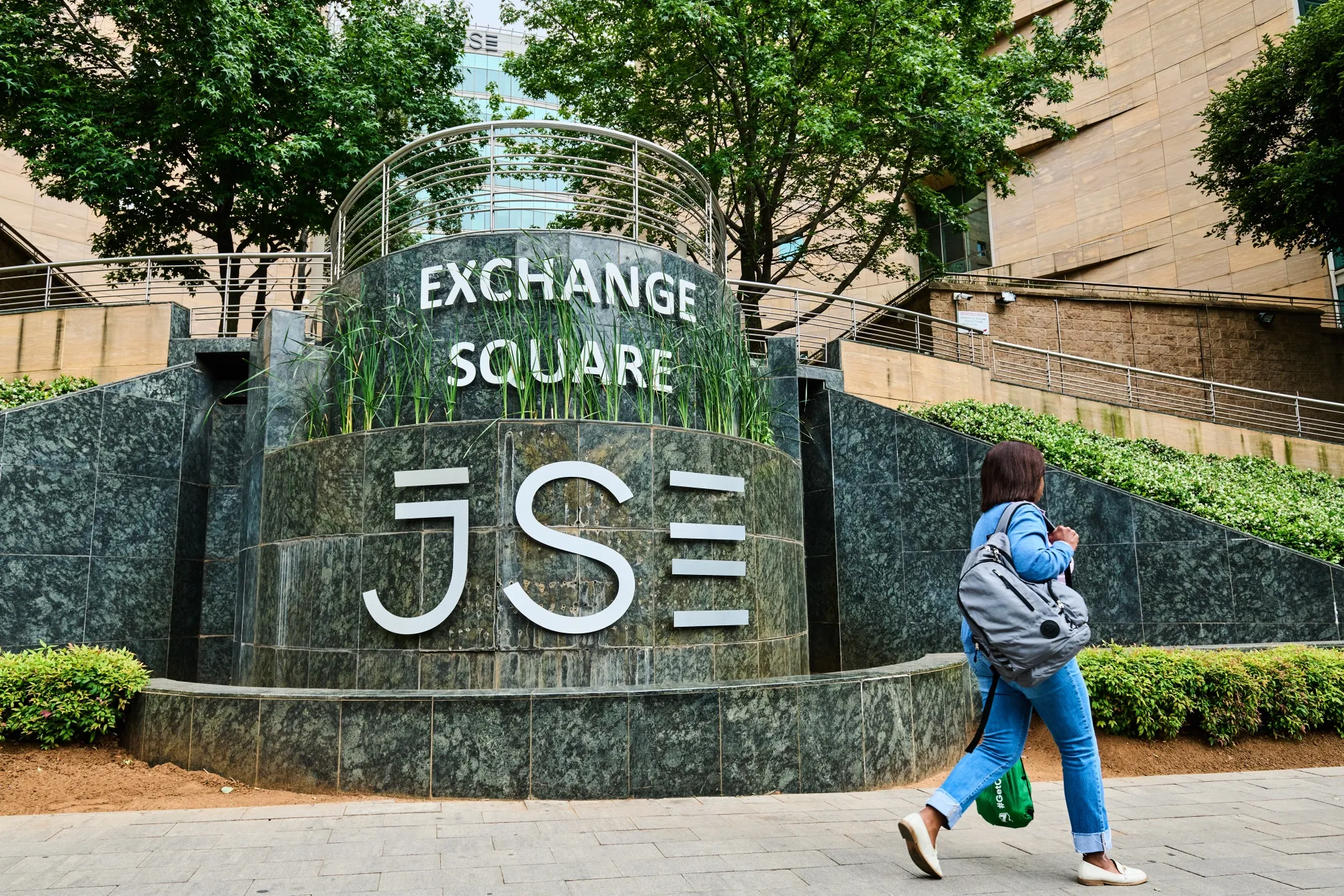
🇿🇦 $232 billion fund manager says Iran war selloff has created rare buying opportunity in South African stocks
Ninety One Plc, a global fund manager, says the market selloff caused by the Iran war has created a buying opportunity in South African stocks. While share prices have dropped over 5% since the conflict began, company earnings remain stable, leading to attractive undervaluation.
The JSE, Africa’s largest exchange, saw its mining sector hit hardest, dropping 13% as precious metal prices retreated. Despite this pain, the $232 billion firm remains bullish on miners, banks, and insurers, arguing that the core drivers for these sectors have not changed.
Global investors are increasingly looking at South Africa as a cheaper alternative to US and European markets. A recent survey shows 81% of fund managers see more buys than sells in the region, with many describing the market as undervalued.
Executive Trivia
(Photo Credit: louis.pressbooks.pub)
Did You Know?

(Photo Credit: climbing-kilimanjaro)
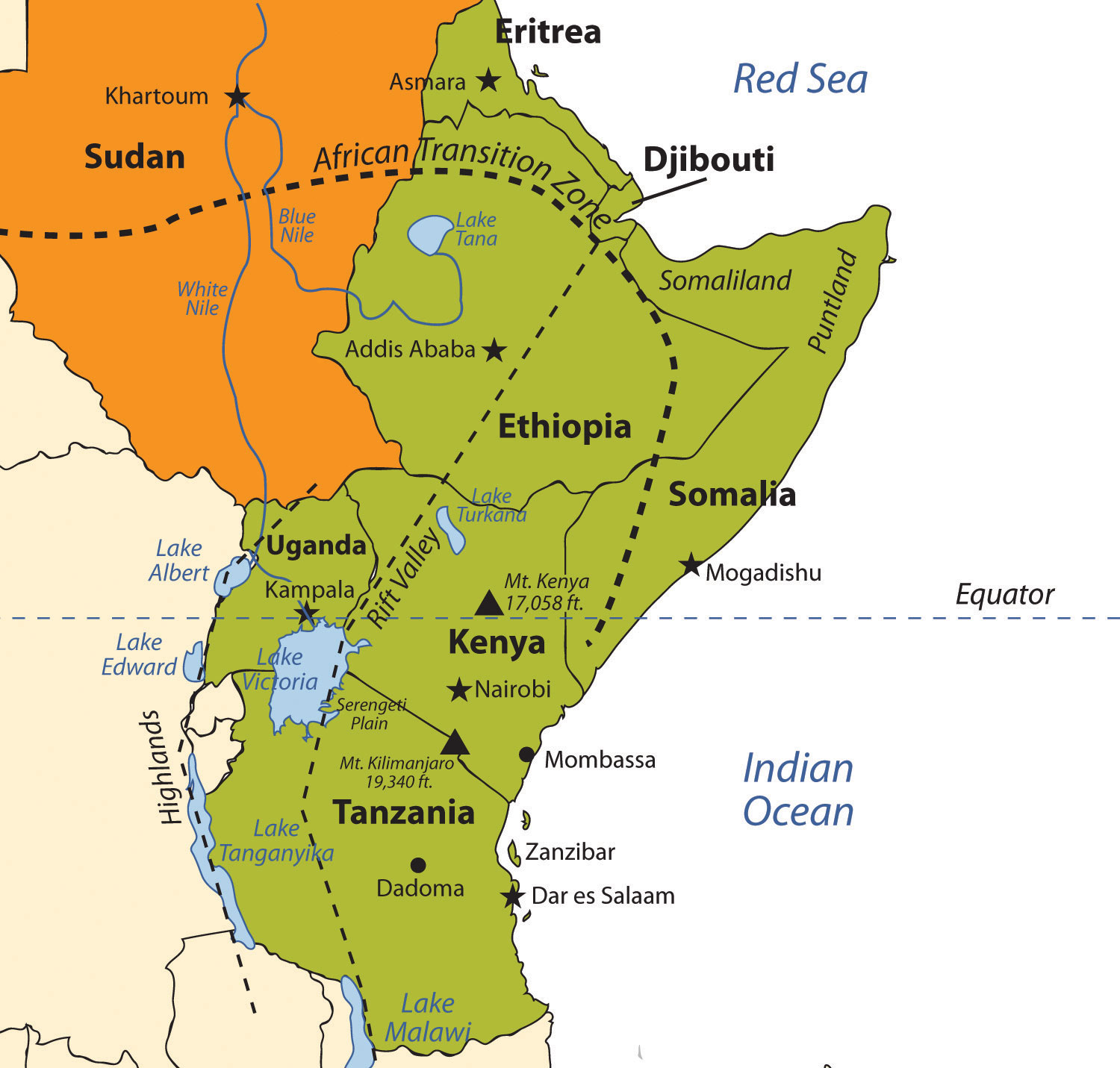
In 2016, Pizza Hut set a Guinness World Record by delivering a pizza to the top of Kilimanjaro. It took four days to reach the summit, and yes, the delivery drivers used a specially designed heater to keep the pepperoni pizza warm at 5,895 meters.
Know someone who'd enjoy this briefing?