From the Editor
The drive for African industrial sovereignty is shifting from a long-term goal to an immediate, capital-intensive reality. From Aliko Dangote’s massive pivot toward gas-powered logistics and domestic steel to Ibrahim Mahama’s $205 million mining expansion in Ghana, the continent’s titans are moving to "de-risk" their supply chains from global volatility. This isn't just about expansion; it’s a structural defense against the "war premiums" and oil shocks currently rippling from the Middle East across the entire continent.
At the same time, this new industrial age is being built on local value. Zimbabwe is rattling the global EV supply chain by forcing lithium processing to happen on home soil, while the digital frontier sees Anthropic bypassing Western policy pressures to bring "sovereign AI" directly to African governments. As the 2026 Soft Power Index confirms Africa's rising global influence, the message across the board is clear: the continent is no longer just a source of raw materials or a passive consumer of tech, it is becoming the architect of its own industrial and digital future.
 | Victor Oluwole, Editor-In-Chief, Business Insider Africa. |
✨ Today’s Must Read
Nigerian billionaire, Dangote turns to Chinese automaker for supply of 1,000+ CNG trucks, trailers

Dangote Refinery Begins Delivery of CNG Trucks for Fuel Distribution (Source: dangote.com)
Aliko Dangote is doubling down on his commitment to "green logistics" with a massive new order of over 1,000 Compressed Natural Gas (CNG) powered trucks from Chinese manufacturer Foton Motor. This deal follows last year’s landmark acquisition of 4,000 CNG vehicles and targets a complete overhaul of the group's logistics network. By mid-2026, the industrial giant aims to have its entire fleet, responsible for everything from cement haulage to fuel distribution, running predominantly on gas rather than expensive, high-emission diesel.
The partnership with Foton goes beyond a simple purchase; it includes a strategic agreement for after-sales maintenance, technical support, and the development of localized assembly infrastructure in Nigeria. During high-level talks in Beijing, both parties explored potential joint ventures in "new energy" products, signaling a move toward building a homegrown ecosystem for sustainable transport. For Dangote, the shift is as much about economics as it is about the environment, as CNG offers a significantly more stable and cost-effective fuel alternative in a volatile energy market.
This move sets a new benchmark for industrial operations in Africa, showing how the continent's largest corporations can lead the energy transition while protecting their bottom line. By leveraging China’s industrial scale to build a cleaner transport network, the Dangote Group is effectively "future-proofing" its supply chain against global oil price shocks. For the broader business community, the message is clear: the transition to gas-powered mobility is no longer a pilot project, it is the new operational standard for large-scale logistics.
Why This Matters
This move is a massive proof-of-concept for Africa’s energy transition. By shifting one of the continent’s largest logistics fleets away from diesel, Dangote is demonstrating that gas-powered mobility is a viable, cost-saving reality, not just a policy goal. For businesses across the region, it provides a blueprint for "de-risking" supply chains from global oil volatility while simultaneously lowering the carbon footprint of industrial trade.
The Big 3
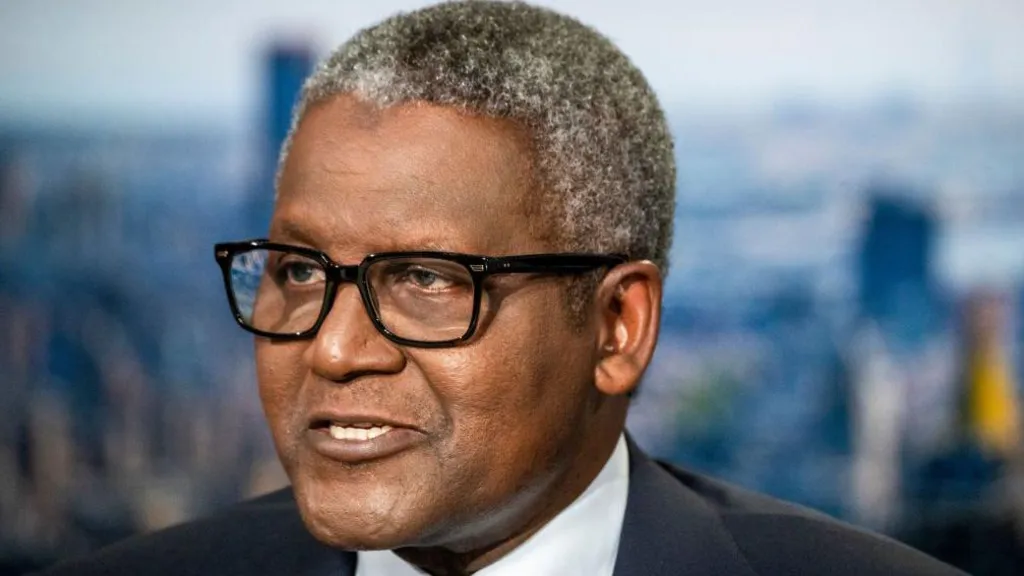
Aliko Dangote (Source: Getty Images)
🇳🇬 Africa’s richest man unveils plans to expand into steel, power, and ports in new industrial push
Aliko Dangote is expanding his industrial empire far beyond cement and oil. The billionaire has officially unveiled plans to move into steel production, electricity generation, and port development. By building a competitive local steel industry, Dangote aims to provide the raw materials needed for Africa’s massive infrastructure projects, effectively reducing the continent’s reliance on expensive foreign imports.
For the regional economy, this expansion signals a shift toward complete industrial self-sufficiency. The move into power generation is particularly strategic, as it aims to solve the energy bottlenecks that have long hampered manufacturing growth. By controlling the entire supply chain, from the power that runs the plants to the ports that ship the goods, Dangote is positioning his group to become the backbone of Africa’s industrial future.
🇬🇭 Ghanaian Mogul Ibrahim Mahama secures US$205 million banking backing to scale work with Gold Fields
Ghanaian mining mogul Ibrahim Mahama has secured a landmark $205 million deal to expand his company, Engineers & Planners (E&P). The funding, provided by a consortium of major banks including Standard Bank and Stanbic, will be used to acquire state-of-the-art equipment and scale up operations at Gold Fields’ Tarkwa and Damang mines. This deal is a massive win for indigenous mining firms, proving they can compete at the highest level of global resource extraction.
The investment is expected to create hundreds of jobs and significantly boost Ghana’s gold output at a time when global prices are surging. By upgrading E&P’s fleet with high-efficiency machinery, Mahama is setting a new standard for local content in the mining sector. For investors, this move highlights the growing capacity of African-owned enterprises to lead large-scale, capital-intensive industrial projects.
🇨🇳 China’s battery makers are feeling the brunt of Zimbabwe’s lithium export ban
Zimbabwe’s decision to ban the export of raw lithium is sending shockwaves through the global green energy market. The government’s "value-addition" policy requires all lithium to be processed locally into concentrates before leaving the country. This move has hit Chinese battery giants particularly hard, as they have invested billions into Zimbabwean mines and now face a sudden supply bottleneck for the critical mineral used in electric vehicle batteries.
While the ban has caused immediate friction in the global supply chain, it represents a bold attempt by Zimbabwe to capture more wealth from its natural resources. By forcing companies to build processing plants on home soil, the country hopes to transform from a simple mineral exporter into a key hub for battery manufacturing. This "resource nationalism" serves as a wake-up call for global tech firms to prioritize local industrial development in their sourcing strategies.
AI & Innovation

U.S.-based AI firm Anthropic bags first multi-sector government deal in Africa despite policy pressures at home. (Photo Credit: RICCARDO MILANI/Hans Lucas/AFP via Getty Images)
U.S.-based AI firm Anthropic bags first multi-sector government deal in Africa despite policy pressures at home
U.S.-based AI giant Anthropic has secured its first multi-sector government partnership in Africa, marking a major milestone for the continent’s digital landscape. The agreement will see Anthropic’s "Claude" AI models integrated into public service delivery, healthcare management, and agricultural data analysis. This move allows African governments to "leapfrog" traditional bureaucratic hurdles by using cutting-edge AI to automate everything from crop disease detection to civil service efficiency.
For the regional tech ecosystem, this deal is a significant win for "sovereign AI", the idea that nations should control the digital tools that drive their growth. Unlike previous tech cycles where Africa was a passive consumer, this partnership focuses on customizing AI to solve local problems using local data. As more governments look to modernize, this collaboration sets a new standard for how global AI firms can partner with the continent to drive socio-economic development without compromising data security.
Listicles

(Photo Credit: Dilip Poddar/Unsplash)
Top 10 African countries with the strongest soft power influence over the world in 2026
The 2026 Global Soft Power Index reveals that African nations are rapidly growing their international influence through culture, diplomacy, and digital creativity. Led by Egypt and South Africa, the continent is leveraging its "soft power" to attract tourism and investment, proving that a global reputation is now as critical as economic output.
S/N | Country | Global Rank |
|---|---|---|
1 | 🇪🇬 Egypt | 40th |
2 | 🇿🇦 South Africa | 43rd |
3 | 🇲🇦 Morocco | 50th |
4 | 🇳🇬 Nigeria | 71st |
5 | 🇩🇿 Algeria | 75th |
6 | 🇹🇳 Tunisia | 80th |
7 | 🇰🇪 Kenya | 83rd |
8 | 🇬🇭 Ghana | 88th |
9 | 🇪🇹 Ethiopia | 94th |
10 | 🇦🇴 Angola | 101st |
Source: Brand Finance Global Soft Power Index 2026
Geopolitics & Power
Tunisia jails its richest businessman Marouan Mabrouk on corruption charges (Source: AFP)
🇹🇳 Tunisia jails its richest businessman Marouan Mabrouk on corruption charges
Tunisia’s business landscape has been rocked by the imprisonment of Marouan Mabrouk, the country’s richest man and a central figure in its economic elite. Mabrouk, who controls a vast empire spanning retail, telecommunications, and banking, was sentenced to several years in prison on charges related to administrative and financial corruption. This move is part of a broader crackdown by the Tunisian government targeting influential figures accused of benefiting from state-linked assets under previous regimes.
For the North African nation, this case is about more than just one billionaire; it signals a fundamental shift in the relationship between political power and private wealth. By taking on a mogul of Mabrouk's stature, whose family once had close ties to the deposed Ben Ali administration, the government is sending a clear message about its intent to dismantle long-standing monopolies. However, critics and some business leaders worry that these aggressive moves could trigger legal uncertainty and chill much-needed domestic investment.
For regional investors, the "Mabrouk case" highlights a rising trend of regulatory and political risk across the continent. As governments face mounting public pressure to address economic inequality, high-profile "anti-corruption" campaigns are becoming a tool for structural change. The outcome of this case will likely define Tunisia's business climate for years, as the state attempts to balance the pursuit of transparency with the need to maintain a stable environment for private enterprise.
Business Implication
For investors, this case serves as a high-stakes reminder of the "political risk" inherent in markets undergoing structural reform. The dismantling of old-guard monopolies may eventually create room for new market entrants and fairer competition, but the immediate fallout often involves legal volatility and a potential freeze on private capital. For firms operating in the region, the priority now shifts to radical transparency and ensuring that local partnerships are insulated from the shifting winds of government anti-corruption campaigns.
Global Trends, African Impact

(Photo Credit: engin akyurt/Unsplash)
Conflict in Iran spills over to Africa’s largest oil refinery as gantry prices surge
The ongoing war in Iran has begun to ripple through the gates of the Dangote Petroleum Refinery, as fuel prices at the gantry have seen an immediate spike. Despite being the largest refinery on the continent, the facility remains tethered to global benchmarks, meaning any disruption to oil supplies in the Middle East directly inflates the cost of refined products in Lagos. This surge has pushed the price of petrol at the gantry significantly higher, signaling a tough week ahead for fuel retailers and consumers.
This price hike highlights the "Oil Paradox" facing many African nations: even with massive domestic refining capacity, local prices are still dictated by international "war premiums." As global crude costs climb toward $82 a barrel, the refinery’s operational costs rise in tandem, forcing a price adjustment that will soon be felt at petrol stations across Nigeria. It serves as a stark reminder that physical infrastructure alone isn't enough to fully decouple a local economy from global geopolitical shocks.
For the broader market, the surge in gantry prices is expected to trigger a fresh wave of transport and logistics inflation. Businesses that rely on heavy-duty haulage are already bracing for higher operational costs, which will likely be passed down to consumers through more expensive goods and services. Until the continent can achieve deeper energy independence through stabilized domestic crude supply, African wallets will remain vulnerable to conflicts thousands of miles away.
Executive Trivia

Dario and Daniela (Photo Credit: Forbes)
Anthropic, the AI firm that just signed a major deal in Africa, was founded by siblings Dario and Daniela Amodei. Which famous AI company did they leave to start Anthropic because of disagreements over safety?
Did You Know?

(Photo Credit: southafricamap360.com)
South Africa was ranked the safest place to be in if World War 3 ever happens.
Know someone who'd enjoy this briefing?