From the Editor
The race for Africa’s resources is no longer just about who has the biggest drill; it’s about who has the best data. In Liberia, a China-funded survey has just handed the government a $3 billion roadmap of iron ore and gold, effectively giving Beijing a first-mover advantage in West Africa's next mining cycle. It is a masterclass in "data-diplomacy" that we are seeing mirrored in the DRC, where billionaire-backed KoBold Metals is trading massive investment for access to decades of geological archives.
While global powers map the soil, Nigeria is busy mapping its own boundaries. The Ministry of Defense’s firm reminder that the "army is still in charge" comes at a tense moment, as U.S. embassy alerts and visa freezes threaten to complicate the very security partnerships Nigeria relies on. It’s a stark reminder that in 2026, true independence isn't just about defending borders, it's about controlling the narrative of who is actually in the driver’s seat.
As we look toward International Women’s Day this Sunday, these stories of "Action" are the perfect backdrop for the 2026 theme: "Rights. Justice. Action. For All Women and Girls" Whether it is Rwanda’s world-leading 63% female parliament or the fact that 1 in 4 African women are running their own businesses, the continent is proving that the most stable economies are the ones where women have a seat at the table. In this edition, we look at the leaders, and the data shaping the next decade.
 | Victor Oluwole, Editor-In-Chief, Business Insider Africa. |
✨ Today’s Must Read
The Nigerian army is still in charge, not the U.S. - Nigeria’s defense minister clarifies
L-R: Minister of Defence, Bello Matawalle and Chief of Defence Staff (CDS) Christopher Musa. [Facebook]
Nigeria’s Minister of Defense, Mohammed Badaru Abubakar, has issued a firm clarification regarding the country’s security partnership with the United States, asserting that the Nigerian military maintains full sovereign control over its operations. This statement comes amidst public debate and speculation regarding the extent of U.S. influence in Nigeria’s internal security affairs following increased high-level diplomatic visits. The Minister emphasized that while Nigeria values international cooperation, all strategic decisions and frontline actions are led exclusively by Nigerian commanders.
The clarification is seen as a strategic move to bolster national pride and reassure the domestic populace that Nigeria is not ceding its defense autonomy to foreign powers. Abubakar highlighted that the relationship with the U.S. is strictly centered on "mutually beneficial" support, primarily through the provision of advanced military hardware, intelligence sharing, and specialized training. By framing the U.S. role as supportive rather than directive, the government aims to maintain its "non-aligned" diplomatic stance while still modernizing its forces to combat regional insurgency.
Beyond the optics, the Minister’s comments underscore the complexity of modern defense diplomacy in Africa. As global powers like the U.S., Russia, and China vie for influence on the continent, Nigeria is positioning itself as a partner that accepts assistance only on its own terms. This stance is critical for maintaining regional leadership within ECOWAS and ensuring that foreign military aid aligns with Nigeria’s specific security priorities rather than the geopolitical agendas of external actors.
Why This Matters
For the business and diplomatic community, this clarification is a signal of "sovereign stability." It reassures investors that Nigeria’s security apparatus remains under local control, reducing concerns about the country becoming a proxy battleground for global powers. By asserting independence while maintaining strong ties with the U.S., Nigeria is protecting its "soft power" and ensuring that its security environment remains predictable and locally managed.
The Big 3
(Photo Credit: africa-newsroom.com)
🇳🇬 U.S. Embassy cancels visa appointments, issues security alert in Nigeria amid potential protests
The U.S. Embassy in Abuja and the Consulate General in Lagos have issued an urgent security alert, leading to the cancellation of all scheduled visa appointments. This sudden move is a precautionary measure in response to potential civil unrest and safety concerns across the country. While the embassy has not provided specific details on the nature of the threat, it has advised all U.S. citizens currently in Nigeria to maintain a high level of vigilance, avoid crowds, and keep a low profile until the situation stabilizes.
For the Nigerian business community and international travelers, this suspension marks a significant disruption to planned trade missions, academic travel, and corporate mobility. Beyond the immediate logistical headache, the alert often serves as a barometer for regional "risk ratings," which can impact short-term investment sentiment. For now, the embassy has stated that new appointments will be rescheduled once the security environment is deemed safe, urging the public to follow official updates via their digital channels.
🇨🇬 Bezos and Gates-backed firm fights for DRC’s mineral data in exchange for more investments
KoBold Metals, the AI-powered mining unicorn backed by billionaires Bill Gates and Jeff Bezos, is locked in a high-stakes negotiation with the Democratic Republic of Congo (DRC) over access to the country’s historical geological archives. The firm is offering to pour massive investment into exploring for copper and cobalt—critical minerals for the global green energy transition—but only if the government hands over its decades-old mineral data. This "data-for-investment" trade-off highlights a new era of exploration where artificial intelligence, not just physical drilling, determines where the world’s next big mines will be found.
For the DRC, the dilemma lies in balancing national sovereignty over its "digital gold" with the urgent need for capital to develop its vast untapped reserves. While KoBold argues that its AI models can find deposits that traditional methods miss, Congolese officials are cautious about giving away proprietary data that could be worth billions. This standoff serves as a case study for "resource nationalism" in the digital age, proving that in the race for battery minerals, accurate data is now just as valuable as the ore sitting in the ground.
🇺🇸 Meet the top private landowner in the US, who owns more than 2.7 million acres and is married to a Walmart heiress
Stefan Soloviev has officially claimed the title of the largest private landowner in the United States, controlling a staggering 2.7 million acres. His vast empire, managed through the Solow Building Company and Crossroads Agriculture, spans across several states, with a heavy concentration in the "Wheat Belt" of Colorado, Kansas, and New Mexico. Unlike many institutional investors who buy land for passive appreciation, Soloviev is an active operator, focusing on large-scale sustainable farming and livestock production to secure the future of American agriculture.
For global investors and agricultural observers, Soloviev’s massive accumulation of land represents a significant trend in "real asset" dominance. By controlling millions of acres of fertile soil, he has built a vertical supply chain that is largely insulated from the volatility of traditional financial markets. This move highlights the growing importance of food security and land sovereignty, serving as a masterclass in how private capital is being deployed to control the foundational resources of the global economy.
AI & Innovation

2026 International Year of the Woman Farmer (Photo Credit: FAO)
Local speech, global impact: The AI closing the gender gap
As the UN kicks off the 2026 International Year of the Woman Farmer, localized AI tools are dismantling the "data gap" that has long sidelined female smallholders. Platforms like Ulangizi are using voice recognition in local languages to provide hyper-specific soil and climate advice to women who previously lacked access to technical support.
By putting AI in the hands of women, experts estimate we could lift 45 million people out of food insecurity, proving that when technology speaks her language, the whole continent gains.
Listicles
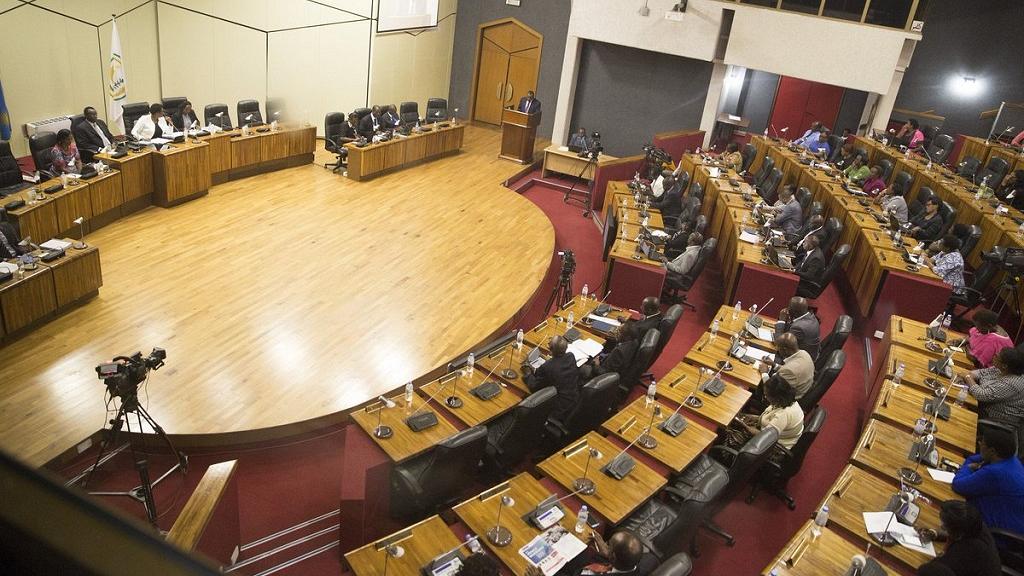
Parliament of Rwanda. (Photo Credit: uk-cpa.org)
Top 5 African Countries with the Highest Female Representation in Parliament
Inclusive lawmaking isn't just about representation; it’s a proven driver of national stability. Data shows that when women hold a "critical mass" of seats (typically 30% or more), parliaments are significantly more likely to pass legislation that prioritizes social safety nets, transparent healthcare systems, and education.
In countries like Rwanda and South Africa, this "seat at the table" has led to policies that directly reduce maternal mortality and improve access to small-business credit. These nations prove that "Justice in Action" isn't a slogan, but a structural shift that turns gender parity into a measurable economic advantage.
S/N | Country | Female Seats |
|---|---|---|
1 | 🇷🇼 Rwanda | 63.8% |
2 | 🇿🇦 South Africa | 44.7% |
3 | 🇨🇻 Cabo Verde | 44.4% |
4 | 🇪🇹 Ethiopia | 41.9% |
5 | 🇸🇳 Senegal | 41.2% |
6 | 🇳🇦 Namibia | 40.6% |
7 | 🇲🇿 Mozambique | 39.2% |
8 | 🇦🇴 Angola | 39.1% |
9 | 🇧🇮 Burundi | 38.2% |
10 | 🇹🇿 Tanzania | 37.8% |
Source: World Economic Forum (WEF)
Geopolitics & Power
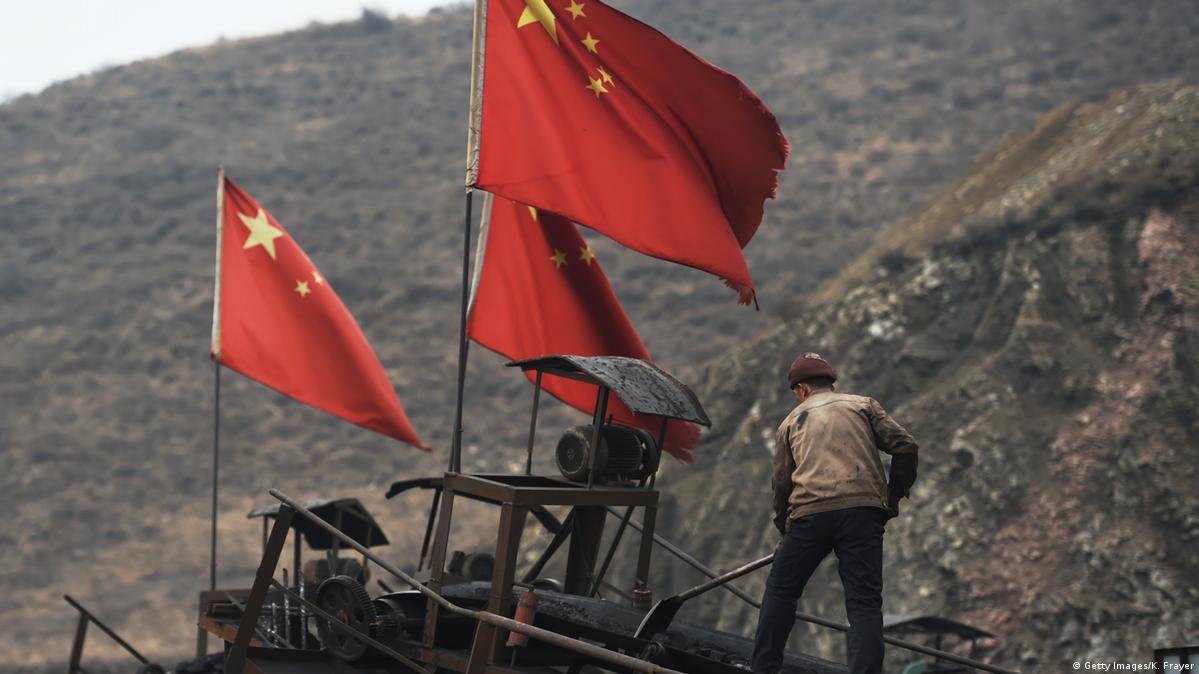
How a China-funded survey uncovered $3B in new mineral deposits in Liberia (Photo Credit: AFP)
🇨🇳 How a China-funded survey uncovered $3B in new mineral deposits in Liberia
A massive geological survey funded by the Chinese government has successfully uncovered an estimated $3 billion worth of new mineral deposits across Liberia. The exploration, which utilized advanced aerial mapping and ground-level sampling, identified significant reserves of iron ore, gold, and critical rare-earth minerals. For Liberia, a nation looking to rebuild its economy through its extractive industries, this discovery represents a generational opportunity to attract new mining concessions and boost national revenue.
From a geopolitical perspective, the funding of this survey by China is a masterstroke of "resource diplomacy." By providing the technical expertise and capital to map Liberia’s hidden wealth, Beijing has effectively secured a front-row seat for its state-owned enterprises in future bidding rounds. This move strengthens China’s "Belt and Road" influence in West Africa, ensuring that as the global race for green energy minerals intensifies, Chinese firms have the best data to secure the most lucrative sites.
However, the discovery also places Liberia at the center of a tug-of-war between global powers. While the Chinese-funded data provides a clear roadmap for development, Western mining giants and diplomatic missions are keeping a close watch on how the Liberian government allocates these new resources. The challenge for Monrovia will be to leverage this $3 billion windfall to drive local industrialization and infrastructure, rather than simply remaining a source of raw exports for global superpowers.
Business Implication
This discovery significantly lowers the "entry risk" for investors by providing a clear, $3B roadmap of where the wealth is. However, because China funded the map, their firms likely have a first-mover advantage. For other global players, the race is now on to secure concessions before the most lucrative sites are locked into long-term bilateral agreements with Beijing.
Global Trends, African Impact
German shipping giant suspends Africa–Upper Gulf cargo amid rising Iran tensions. (Photo Credit: Hapag-Lloyd)
German shipping giant suspends Africa–Upper Gulf cargo amid rising Iran tensions
The ripple effects of the conflict in Iran have officially shifted from "price shocks" to a physical logistics freeze. Hapag-Lloyd, one of the world's largest shipping lines, has announced the suspension of its cargo services between Africa and the Upper Gulf. The decision follows a series of security incidents and rising threats to commercial vessels in the region, making the standard trade routes too risky for the German giant to navigate.
For African markets, this suspension creates a critical supply chain "choke point." The Upper Gulf is a vital corridor for consumer goods, construction materials, and specialized machinery moving into the continent. With a major carrier pulling out, businesses should expect delayed shipments and a spike in freight insurance costs as other lines scramble to pick up the slack or take longer, more expensive routes around the Cape of Good Hope.
It is a stark reminder that as long as global "hot zones" remain unstable, the cost of doing business in Africa will be dictated by events thousands of miles away. This move is expected to trigger a fresh wave of transport and logistics inflation across the region. Until the continent can achieve deeper maritime independence or global tensions subside, African supply chains remain highly vulnerable to geopolitical shocks.
Executive Trivia
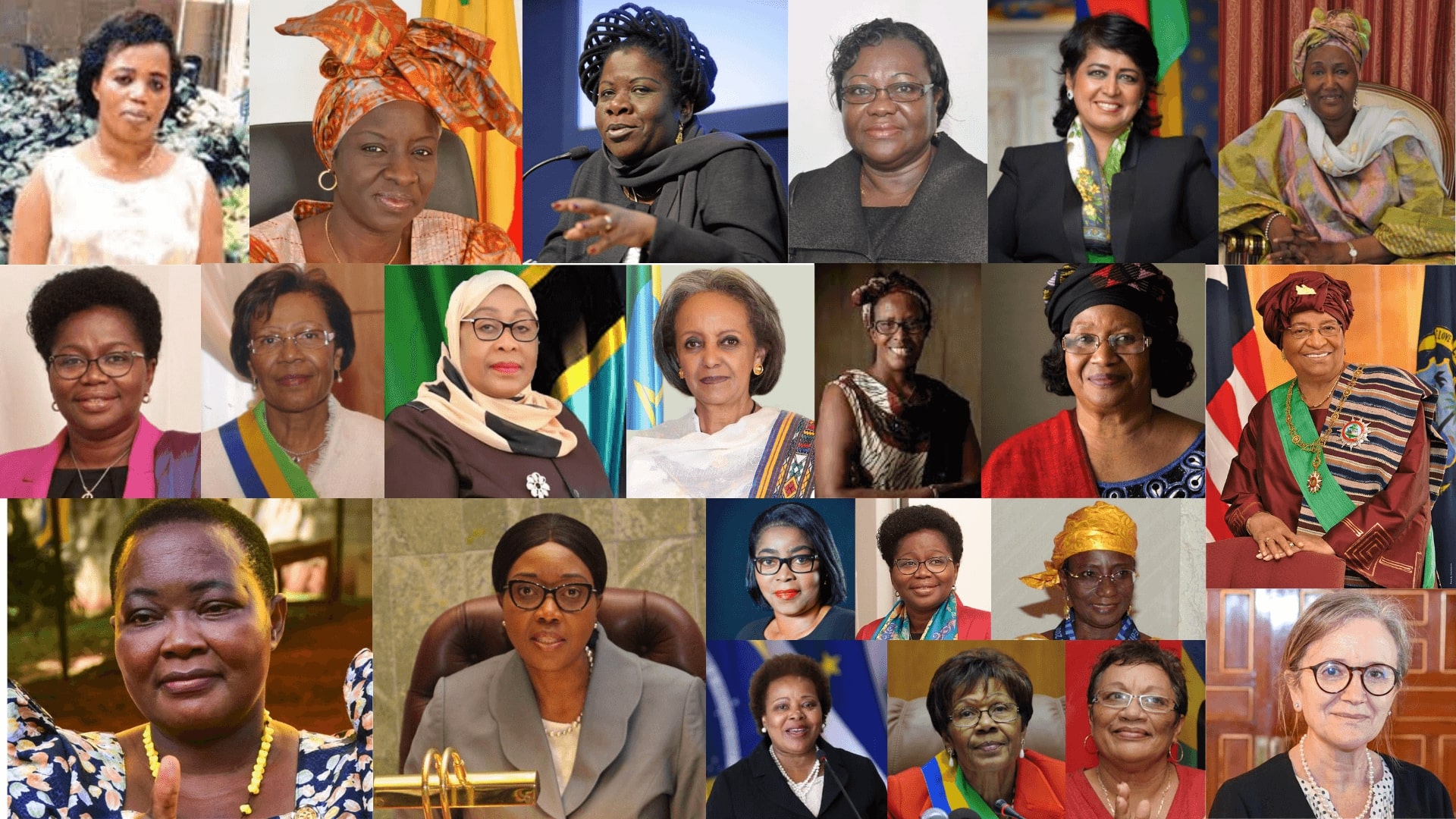
(Photo Credit: africa.com)
Who was the very first woman to be elected as a President in Africa?
Did You Know?

Young african female fashion dsigner. (Photo Credit: Freepik/ASphotofamily)
Africa has the highest rate of female entrepreneurs in the world. According to the World Bank, 1 in 4 African women starts or manages a business. That’s the highest percentage of any continent on the globe!
Know someone who'd enjoy this briefing?