Business Brief
By Business Insider Africa
From the Editor
There’s a clear sense that Africa is building its own armor this week. We’ve gone from watching Aliko Dangote add billions to his net worth through industrial scale, to now seeing African central banks create a $530 billion safety net made of physical gold. It isn’t just a response to high prices; it’s a strategic move away from the dollar's volatility. By doubling their bullion holdings since 2022, nations like Egypt and Tanzania are essentially buying their own financial insurance policy.
This theme of keeping value "in-house" is cropping up everywhere. While Ghana is giving foreign mining giants a hard 2026 deadline to hand over operations to local contractors, the Dangote Group is making similar moves within its own walls. The appointment of Jamil Abubakar to lead the group’s infrastructure and logistics arm ensures that as Africa’s largest industrial empire targets a $100 billion valuation, the steering wheel remains firmly in the family.
Even as the global tech sector navigates a painful "AI air pocket," the momentum in Africa is shifting toward tangible assets and specialized services. From the record imports of Chinese solar panels to South Africa and Nigeria rivaling Asia in the outsourcing market, the focus is shifting. We are seeing a continent that is no longer just participating in the global economy but is actively reconfiguring it to better serve its own long-term stability.
 | Victor Inusa, Newsletter Editor. |
✨ Today’s Must Read
Gold boom lifts Africa’s reserves to $530 billion as nations rethink the dollar
:max_bytes(150000):strip_icc():format(webp)/GettyImages-2252743923-5ca1311081bf4d8f80c2d22d0ac41b3a.jpg)
(Photo Credit: Getty Images)
Africa’s central bank reserves reached $530 billion in 2025, a $50 billion jump from the previous year. This growth is fueled by soaring gold prices and a strategic move by several nations to strengthen their financial buffers against currency volatility and global uncertainty.
Gold now makes up 17% of Africa's total reserves, nearly doubling its share since 2022. Physical holdings grew from 663 to 738 tonnes as countries like Egypt, Ghana, and Tanzania actively accumulated bullion to diversify away from traditional currencies like the U.S. dollar.
Nigeria's reserves saw a rise to $45.5 billion by late 2025, with projections reaching $51 billion for 2026. However, levels eased to $48.6 billion by April 2026, highlighting the ongoing pressure from debt servicing and the need for central banks to defend their local currencies.
Why This Matters
The shift toward gold marks a structural change in how African nations manage wealth. By holding more bullion, central banks gain a safer asset to cushion against external shocks and import pressures, reducing their total dependence on the dollar in an uncertain global economy.
The Big 3

L-R: Jamil Abubakar and Bill Gates. (Photo Credit: X/Famil2018)
🇳🇬 Meet Jamil Abubakar: Aliko Dangote’s son-in-law now in charge of logistics at the family's $33 billion empire
Jamil Mohammed Abubakar, an aviation professional and Aliko Dangote's son-in-law, has been appointed as the Managing Director of Infrastructure & Logistics at the Dangote Group. Effective April 20, 2026, he will oversee the group’s ports and trade infrastructure as part of its Vision 2030 strategy to build a $100 billion enterprise and expand export footprints across Africa.
This appointment reinforces a family-led succession strategy, following recent executive roles given to Dangote’s three daughters. Abubakar, who has 14 years of experience in commercial aviation and is the son of a former Inspector General of Police, will report directly to Aliko Dangote to drive operational improvements and unlock new trade corridors for the $33 billion empire.
🇿🇦 Africa’s second-richest man pulls plug on one of Africa’s largest banks for an extra $200m
South African billionaire Johann Rupert, via his firm Remgro, has sold his remaining shares in FirstRand for $218.5 million. This ends a six-year divestment from the banking giant, which owns FNB and RMB, as Remgro reallocates capital from listed finance toward private assets.
The sale is part of a strategy to bolster strategic cash reserves and shift focus away from non-core investments. It follows other major moves by the Rupert family, including the delisting of Mediclinic and the sale of luxury watchmaker Baume & Mercier earlier this year.
🇬🇭 Africa's top gold producer sets 2026 deadline for foreign miners to hand operations to local contractors
Ghana has ordered major foreign miners, including Newmont, AngloGold Ashanti, and Zijin Mining, to transition operations to local contractors by December 2026. This push aims to increase local participation in the gold sector as global commodity prices remain at elevated levels.
New rules require surface mining to be 100% Ghanaian-owned, while underground work must be at least 50% local. Following the rejection of a lease for Gold Fields, the government is signaling a strict stance to ensure more value stays within Africa's top gold-producing nation.
AI & Innovation

(Photo Credit: Meta AI)
Tech jobs have hit an AI air pocket. Is it temporary or permanent?
The tech industry is currently experiencing a wave of job cuts, with companies like Meta, Microsoft, and Oracle shedding thousands of roles. While these layoffs are painful, they are being described as an "AI air pocket" rather than a total collapse, as many firms pause hiring to evaluate how automation tools can handle certain tasks.
Some of this pressure may be temporary, as companies are still correcting for pandemic-era over-hiring. Additionally, many tech giants are currently diverting funds away from headcount to invest heavily in AI data centers and infrastructure. This capital expenditure boom is projected to peak around 2028, potentially freeing up finances for future hiring.
However, some changes appear permanent. AI is reducing the need for middle managers and roles focused on process and oversight, favoring "builders" who produce tangible output. While routine positions in areas like customer service may disappear, new roles are emerging, such as "robot wranglers" and "Design Producers" who use AI to amplify team creativity.
Quote Of The Day
In entrepreneurship, an unwavering determination is a great asset. This determination is the driving force that will keep you going when things get tough, because things will get tough at some point.
Listicles

Beautiful Hindu Temple Attraction Seychelles. (Photo Credit: Dreamstime)
Top 10 richest African countries in 2026, according to latest ranking
The HelloSafe Prosperity Index 2026 ranks Africa's most prosperous nations based on GDP, HDI, and income equality. Seychelles leads with a score of 98.09, followed by Mauritius and Algeria, while structural inequality keeps giants like South Africa lower on the list.
| S/N | Country | Prosperity Index Score (0-100) |
|---|---|---|
| 1 | 🇸🇨 Seychelles |
|
| 2 | 🇲🇺 Mauritius |
|
| 3 | 🇩🇿 Algeria |
|
| 4 | 🇬🇦 Gabon |
|
| 5 | 🇪🇬 Egypt |
|
| 6 | 🇱🇾 Libya |
|
| 7 | 🇹🇳 Tunisia |
|
| 8 | 🇧🇼 Botswana |
|
| 9 | 🇲🇦 Morocco |
|
| 10 | 🇿🇦 South Africa |
|
Source: HelloSafe Prosperity Index 2026
Geopolitics & Power

(Photo Credit: Flexi-Personnel)
🇿🇦 South Africa and Nigeria break into global top 10 outsourcing destinations
South Africa and Nigeria have secured the 5th and 6th positions globally in the 2026 Global Outsourcing Talent Index. This ranking highlights Africa’s rising role in the business services industry as firms look for English-speaking talent and lower-cost labor outside of Asia.
The index evaluates 193 countries on factors like labor cost, English proficiency, and digital infrastructure. South Africa’s success is anchored by its strong corporate sector, while Nigeria’s ranking is driven by its massive workforce and highly competitive labor costs.
The global outsourcing market is expected to more than double by 2033, reaching over $695 billion. While hubs like Kenya and Egypt also rank in the top 20, a divide remains as other African nations struggle with poor infrastructure and political instability.
Business Implication
The rise of South Africa and Nigeria as top-tier hubs signals a major shift for global firms seeking to diversify their service chains. For businesses, this means increased investment in Africa’s digital infrastructure and a growing pool of affordable, specialized talent.
Global Trends, African Impact
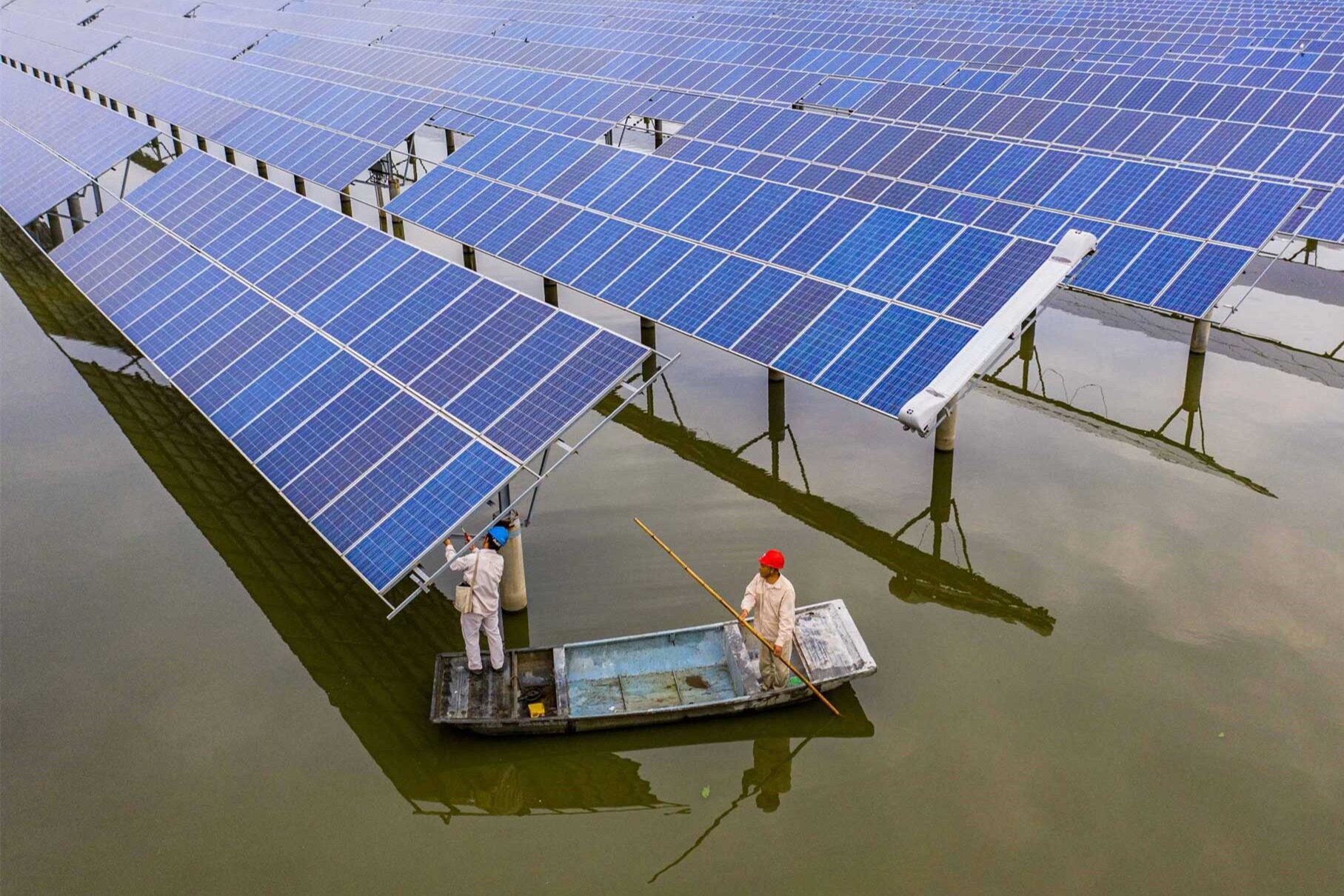
(Photo Credit: Seetao)
Africa imports record Chinese solar panels as prices fall and demand surges
Africa imported a record 18.8 gigawatts of Chinese solar panels in 2025, a 48% jump from the previous year. This volume is more than three times the capacity of Ethiopia’s Grand Renaissance Dam. The surge is driven by rising Western tariffs, which have led Chinese manufacturers to redirect exports toward emerging markets like Africa.
North Africa is at the forefront of this expansion, with Egypt doubling its imports to 2.3 gigawatts and Algeria increasing its intake sixfold. Other major markets including Nigeria, South Africa, and the Democratic Republic of Congo each imported more than 1 gigawatt as the continent ramps up its renewable energy capacity.
Low prices are the main driver of this trend, as Chinese panels are typically 20% to 30% cheaper than other options. This rapid deployment helped renewable energy overtake coal growth in Africa in 2025. However, the shift also deepens the continent's reliance on imported technology for its energy security.
Executive Trivia

(Photo Credit: Getty Images)
As of 2026, which city has officially overtaken Tokyo to become the world's most populated urban area, with over 41 million residents?
Did You Know?
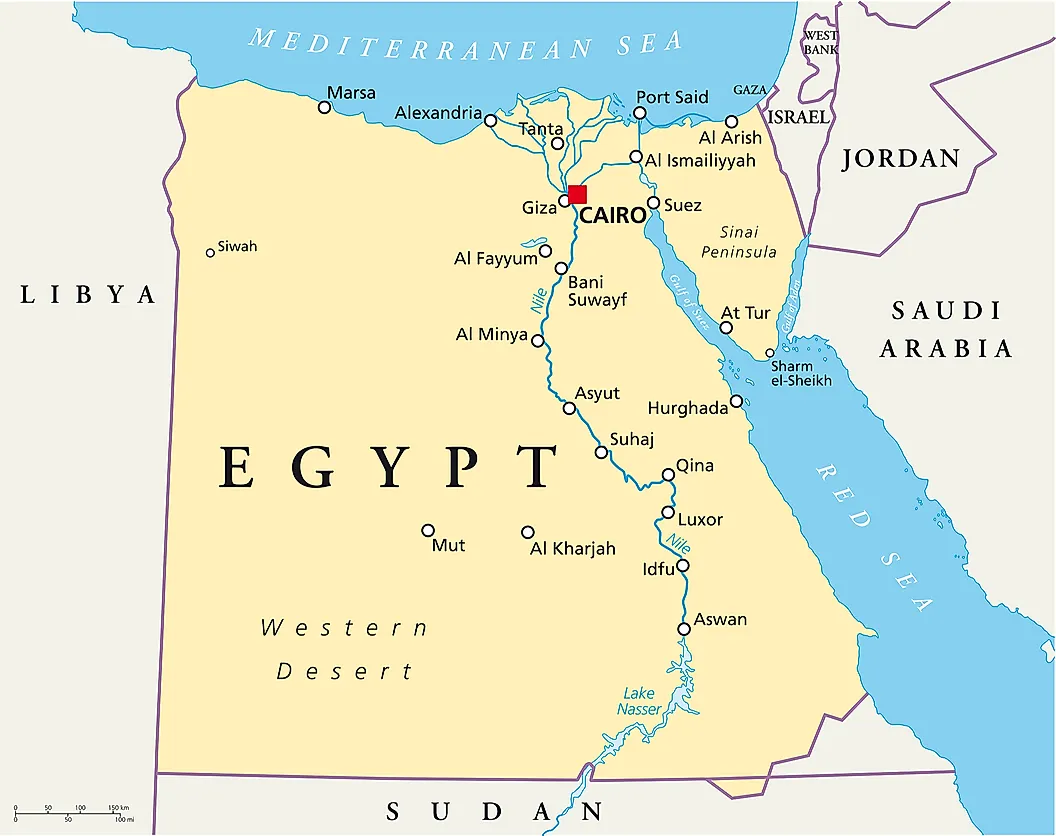
Map of Egypt. The Sinai Peninsula is considered part of Asia. (Photo Credit: World Atlas)
Egypt is the only contiguous African country located on two continents. While the majority of the nation sits in North Africa, the Sinai Peninsula extends into Southwest Asia. This unique position makes Egypt a "transcontinental" bridge, connecting the Mediterranean and Red Seas through the Suez Canal.
Know someone who'd enjoy this briefing?