From the Editor
Dear readers,
This week, the signals are coming from governance, investment, minerals and security. Transparency International’s latest ranking places Seychelles as Africa’s least corrupt country, followed by Cape Verde and Botswana. Rankings alone do not fix institutions, but they do influence how investors and partners see a country.
Capital is also on the move. Aliko Dangote’s visit to Burundi suggests interest in cement, power, agriculture, and infrastructure, reinforcing his focus on building across Africa.
In Southern Africa, Mozambique has secured $276 million in U.S. support for a rare earth project, while Botswana is now exploring copper, cobalt, and lithium as it looks beyond diamonds.
Security is part of the story, too. The planned deployment of U.S. troops to train Nigerian forces points to deeper defence cooperation and raises questions about regional stability and business risk.
Taken together, these developments show a continent that is positioning itself more deliberately in the global economic and geopolitical conversation.
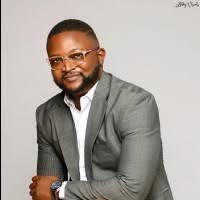 | Victor Oluwole, Editor-In-Chief, Business Insider Africa. |
✨ Today’s Must Read
10 least corrupt African countries, according to the latest ranking

10 least corrupt African countries, according to latest ranking
While corruption remains a problem across Africa, certain countries stand out for honest governance. According to Transparency International's most recent report, Seychelles is the least corrupt African nation, with an index score of 68.
Cape Verde (62) and Botswana (58) follow closely behind, while Rwanda, Mauritius, Namibia, Senegal, Benin, Côte d'Ivoire, and Ghana are all among the top ten nations, known for their institutional strength, accountability, and policy effectiveness.
Why This Matters
Being relatively corruption-free also strengthens democracy and accountability. Citizens in these nations benefit from transparent governance, reliable public policies, and a greater voice in how their countries are run.
Additionally, countries like Seychelles, Cape Verde, and Botswana attract more foreign investment, grow key sectors like tourism and finance, and can deliver public services more efficiently because funds aren’t siphoned off by corruption.
The Big 3

Dangote eyes investment in Burundi, committing to investing in Africa alone, and nowhere else
🇧🇮 Dangote eyes investment in Burundi, committing to investing in Africa alone, and nowhere else
Africa’s richest man, Aliko Dangote, with former Nigerian President Olusegun Obasanjo, visited Burundi to explore opportunities in cement, power, agriculture, and infrastructure. Technical teams from both sides will turn discussions into viable projects, reflecting Dangote’s focus on investing exclusively in Africa.
Dangote’s expansion also spans Ghana, for fuel supply, and Cameroon, where negotiations with state-owned Sonara aim to finance and supply refinery operations under the “Parras 24” plan.
🇲🇿 U.S. backs major rare earths project in Mozambique, one of southeastern Africa’s largest
The U.S. government has confirmed support for the Monte Muambe rare earth project in Mozambique, aiming to diversify its supply chain and reduce dependence on China, which controls around 70% of global production.
The $276 million project is expected to produce 15,000 tonnes of mixed rare earth carbonate annually, with support from the U.S. Trade and Development Agency validating its strategic and economic potential.
🇧🇼 With diamond losing its shine, Botswana is set to explore other ‘critical’ options
Botswana is planning to diversify its mining sector beyond diamonds, exploring critical minerals like copper, cobalt, and lithium to meet rising global demand and reduce reliance on a single commodity. The government aims to survey the 70% of its territory that remains largely unexplored and attract investors to new high-value mineral projects.
While Botswana remains the world’s largest diamond producer by value, shifting market trends, including competition from lab-grown diamonds, have prompted the country to rethink its long-term economic strategy.
Listicles
In Africa, the strength of a country’s naval fleet is a practical requirement rather than a symbolic show of force. This raises the question of which African country is best equipped to defend its coastlines.
Country | Naval Fleet Strength | Global Rank |
|---|---|---|
🇳🇬Nigeria | 152 | 22nd |
🇪🇬Egypt | 149 | 23rd |
🇩🇿Algeria | 111 | 34th |
🇲🇦Morocco | 100 | 38th |
🇿🇦South Africa | 63 | 52nd |
🇹🇳Tunisia | 37 | 61st |
🇲🇿Mozambique | 36 | 62nd |
🇦🇴Angola | 32 | 65th |
🇰🇪Kenya | 27 | 72nd |
🇪🇷Eritiea | 23 | 76th |
Geopolitics & Power

U.S. to send 200 troops to train Nigerian soldiers as it negotiates for a military base in the country
🇳🇬 U.S. to send 200 troops to train Nigerian soldiers as it negotiates for a military base in the country
The United States plans to send 200 troops to Nigeria to train local forces combating Islamist militants, marking a deepening security partnership between Washington and Africa’s most populous nation. The deployment builds on prior U.S. airstrikes, surveillance operations, and the recent delivery of military supplies to support counterterrorism efforts.
The U.S. presence will focus on training and intelligence support, with discussions underway to establish a drone refuelling station to expand surveillance capabilities
Business Implication
Experts suggest that the growing US-Nigeria security relationship indicates more stability as well as safety for businesses in a region long plagued by militant violence. Improved training, intelligence assistance, and prospective drone monitoring might help to mitigate hazards to important infrastructure, trade routes, and energy projects.
Companies operating in Nigeria, particularly those in the oil and gas, logistics, and banking industries, stand to gain from improved security and more trust in long-term
Global Trends, African Impact

Google's ex-CEO is worried most countries will adopt Chinese AI models.Alexander Tamargo/Getty Images for America Business Forum
🤖 Eric Schmidt-backed data center venture is negotiating a major deal with Google
Bolt Data and Energy, co-founded last year by former Google CEO Eric Schmidt, is negotiating with Google to anchor a large data center campus in West Texas. The project could begin with an initial 250-megawatt facility, expanding over time into a 5-gigawatt campus, leveraging land and resources from Texas Pacific Land Corporation for power and cooling.
The development highlights Big Tech’s race to secure AI infrastructure, with companies like Google, Amazon, and Oracle committing record spending this year, hundreds of billions of dollars, to power AI operations
Quick Poll

Who is the oldest African president?
Did You Know?

German football powerhouse Borussia Dortmund has launched a youth academy in Ghana called the BVB International Academy Ghana, affording young footballers in Ghana direct access to the same development philosophy used by the highly successful Bundesliga club.
Know someone who'd enjoy this briefing?